Kale Powder

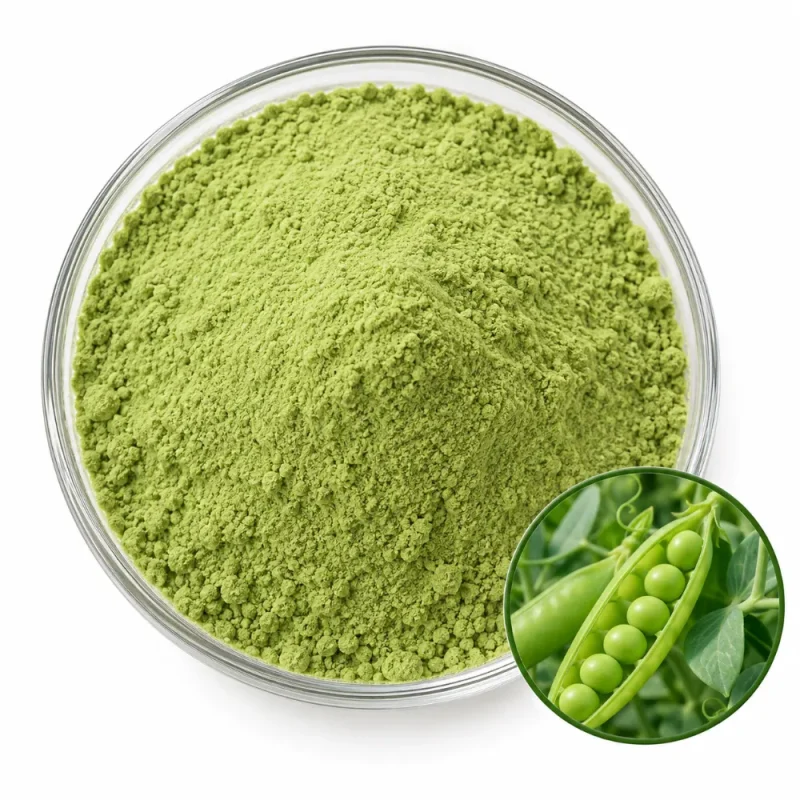
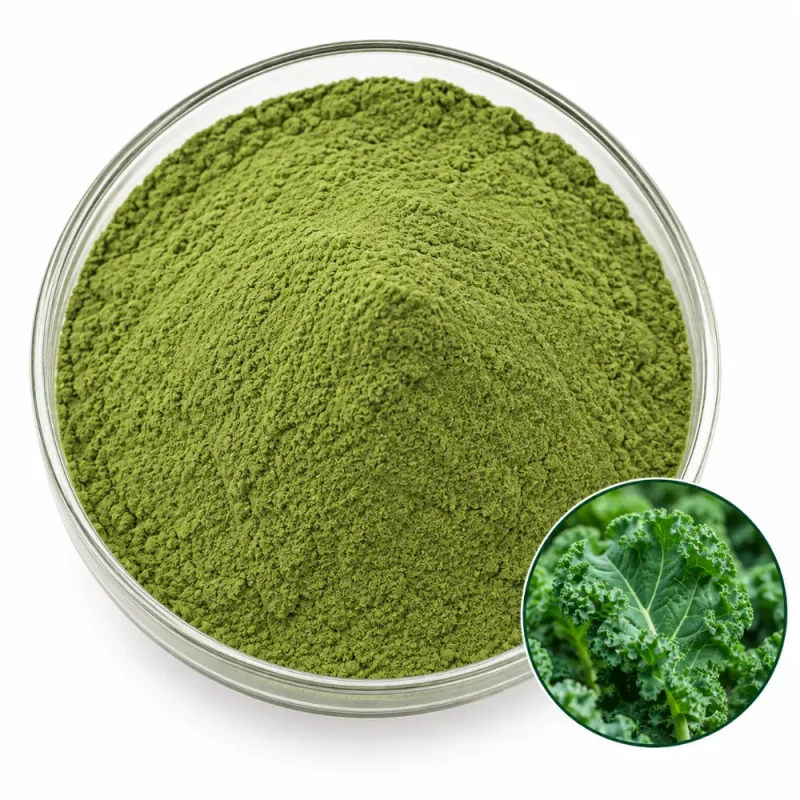
Leaves of curly kale, Brassica oleracea var. sabellica, are washed, dried in warm air and milled to 80 mesh to give kale powder. The powder is green with a deep olive cast and tastes grassy and faintly bitter, with a cabbage-like undertone. Roots, flower stalks and the seed of the plant are not used.

Kale is the leafy member of the cabbage group, and its blades are thick, ruffled and fibrous. The powder keeps the fiber, chlorophyll and sulfur flavor precursors of the leaf, with no carrier and no juice separation.

Dehydrated Kale Processing

The botanical entity is Brassica oleracea var. sabellica L., the curly kale cultivar group of wild cabbage. Kale shares its species with broccoli, cabbage, cauliflower and kohlrabi, and the botanical group names mark how breeders reshaped one plant. Lacinato or dinosaur kale is another cultivar group, Brassica oleracea var. palmifolia, with flatter, darker leaves. The part used here is the leaf blade with its stalk trimmed.

The raw material is fresh kale leaf. Leaves are washed, de-ribbed or trimmed, dried in warm air and ground to powder. Thick leaf veins stay in part, which adds fiber and a coarser, greener mouthfeel than a spinach powder gives. Heat inactivates the enzyme that turns glucosinolates into sharp isothiocyanates, so the powder tastes of cooked greens and not of the raw leaf.

Kale is a cool-season crop that sweetens after frost, because the plant converts starch to sugar to protect itself from cold. Leaves harvested after frost are milder and less bitter than leaves from warm weather. The cultivar and season are not stated, so the powder is described by character and not by origin.

Kale leaves are tougher than most salad greens, and they survive drying with more of their structure intact. The powder is therefore firmer and slower to hydrate than a tender-leaf powder, and it tolerates cooking steps in dry mixes better.

Kale Color, Flavor & Composition

Kale powder is deep green with an olive-brown tone, and it forms a green suspension with fine leaf fragments in water. The taste is grassy, slightly bitter and mineral, with a savory, cabbage-like depth. Chlorophyll gives the color, and heat and acid shift it toward olive.

Characteristic constituents are chlorophylls, lutein and other carotenoids, glucosinolates, dietary fiber and minerals. No figure is given for any of them. Kale is also a nitrate-bearing leafy vegetable, and the powder holds the fiber and sulfur-bearing compounds of the leaf.

Kale tastes best where fat, acid or sweetness offset the bitterness. Olive oil, lemon, cheese and nuts soften it in savory products, while fruit powders do the same in drinks, and without such partners the bitter edge is the first thing a taster notices.

FormWhat It IsChoose It When
Dehydrated Kale PowderHot-air dried and milled whole leafWhole-leaf fiber and a deep green are wanted
Kale Juice PowderSpray-dried juice on a carrierA fine, fiber-light, dispersible green is wanted
Freeze-Dried Kale PowderWhole leaf dried under vacuumA fresher green and aroma matter most

Typical Specifications

Specification ItemProduct Information
Latin NameBrassica oleracea var. sabellica
Plant PartLeaf & Herb
ProcessingDehydrated
Common NameKale
Raw MaterialFresh kale leaf
Ingredient TypeDehydrated Vegetable Powder
AppearanceGreen powder (natural color of the dried material)
FlavorGrassy, slightly bitter, mineral
Solubility / DispersibilityWater Dispersible
Quality Parameters
Moisture (LOD)≤8.0%
Particle Size80 mesh
Heavy MetalsLead ≤2 ppm · Arsenic ≤1 ppm · Cadmium ≤1 ppm · Mercury ≤0.1 ppm
MicrobiologyTPC ≤10,000 cfu/g · Yeast & Mold ≤1,000 cfu/g · E. coli Negative · Salmonella Negative/25 g
Shelf Life24 months in unopened original packaging, cool and dry storage

Application Areas

Green Snack Chips and Crackers

Snack makers add kale powder to chip and cracker doughs for green color and a savory vegetable note, echoing kale chips. The fiber binds water, so dough hydration is adjusted, and baking darkens the green, so color is checked on the finished piece.

Green Smoothie and Drink Sticks

Greens drink sticks combine kale powder with fruit powders and a sweetener, which masks its bitterness. The powder disperses in cold water with stirring, and its fiber settles slowly if the drink stands, so a sachet is shaken before drinking.

Pasta, Noodle and Bread Doughs

Pasta, noodle and flatbread makers use kale powder for green color and a flavor of cooked greens. Boiling and baking move the shade toward olive, and the dough absorbs more water because of the powder’s fiber.

Savory Seasoning and Dip Mixes

Dry seasonings and dip mixes include kale powder for color and an umami-leaning leaf flavor. It pairs with garlic, onion and cheese, and the stronger bitterness is balanced by fat and salt in the finished product.

Plant-Based Burger and Veggie Patty Mixes

Plant-based patties and veggie fritters take kale powder for color, fiber and a cooked-greens flavor. It blends with grains and legumes, and its fiber holds moisture in the cooked patty, so the green flecks stay visible after frying or baking.

Handling Notes

Kale powder is hygroscopic and picks up moisture in humid air. It clumps, darkens at the surface and forms a crust in an open drum, and the fibrous particles can hold water unevenly. Weigh in a dry room and reseal the liner after each draw.

The green is the quality that fades first. Light, heat and acid convert chlorophyll to olive-brown pheophytin, and the process is faster in warm, bright storage and in acidic dry mixes. Opaque, sealed packaging in a cool store holds the shade, and stainless steel avoids metal-ion darkening.

Because of its fibrous particles and strong grassy aroma, kale powder rewards short open times. Aged powder smells of hay and stale cabbage. Use opened bags promptly, keep the drum away from delicate flavors, and screen the powder through a sieve if leaf fragments would show in a pale product.

Kale has coarser, tougher particles than most leaf powders, and they settle quickly in a mixer. Blend the powder in the early stage with other dry ingredients so that it is distributed evenly, and avoid long holds of a finished mix, where the heavier leaf fragments drift to the bottom.

Packaging & Commercial Supply

Essencefield supports product evaluation, formulation trials, commercial orders, and ongoing ingredient supply. Packaging, storage, and shipping arrangements are determined by product characteristics, order quantity, stability requirements, and destination-market needs.

Supply ItemGeneral Information
SampleAvailable upon request for formulation, testing, and supplier evaluation
Order Quantities100 g · 1 kg · 5 kg · 25 kg · 100 kg · 500 kg · Bulk
Sample Lead TimeTypically 5–7 days after sample confirmation
Production Lead TimeTypically 15–30 days after order and specification confirmation
PackagingSuitable protective inner packaging with bags, cartons, drums, or other appropriate outer packaging
StorageStore in tightly sealed, suitable protective packaging in a cool, dry environment. Protect from moisture, heat, and direct sunlight. Specific storage conditions follow the approved product specification.
DocumentationCOA · Product Specification · TDS · SDS · Applicable declarations (as applicable)

Final order quantities, lead times, packaging, documentation, and shipping arrangements are confirmed according to the selected product and commercial requirements.

Request Ingredient Specifications & Quote

Share your target specification, application, quantity, and documentation needs. We’ll help confirm suitable options, samples, and commercial supply details.