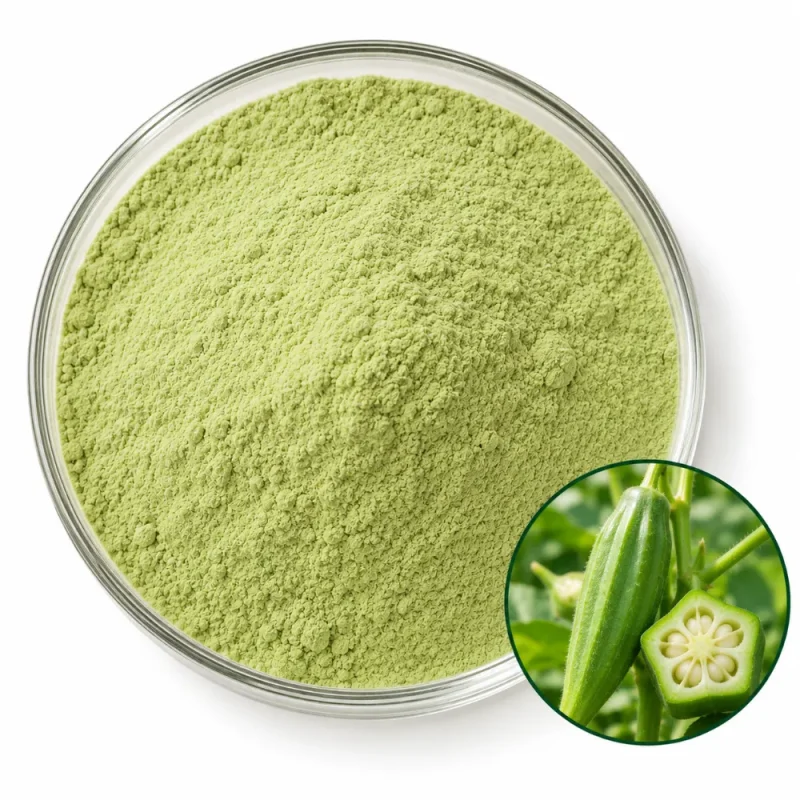
Dehydrated Okra Processing
The species is Abelmoschus esculentus (L.) Moench, okra or lady’s finger, a tall annual of the mallow family (Malvaceae) related to cotton and hibiscus. Other plants carry the name loosely: the Chinese medicinal flower Abelmoschus manihot, a close relative, is a different species with a different use. The part used is the immature seed pod, eaten green before the seeds harden.
The raw material is fresh okra pod. Pods are washed, trimmed, sliced, dried in warm air and ground into powder. The slime-forming polysaccharides survive drying, so the powder hydrates into a viscous, slightly stringy solution. Seeds inside the pods stay in the slices and are ground with them, adding some fiber and a mild nutty element.
Okra is a heat-loving crop and the pods grow fast, so they are picked every day or two while tender. Pods left on the plant become tough and fibrous within a short time, and quality for processing depends on picking young. No cultivar is specified, and the powder is described by its mildness and tint.
Mucilage is a mix of pectic polysaccharides, glycoproteins and acidic sugars, and it makes up a notable share of the pod’s soluble fiber. This material binds water, which explains the thickening, and it also forms films around particles, which explains why okra powder suspends well in cold liquid.