Cocoa Powder

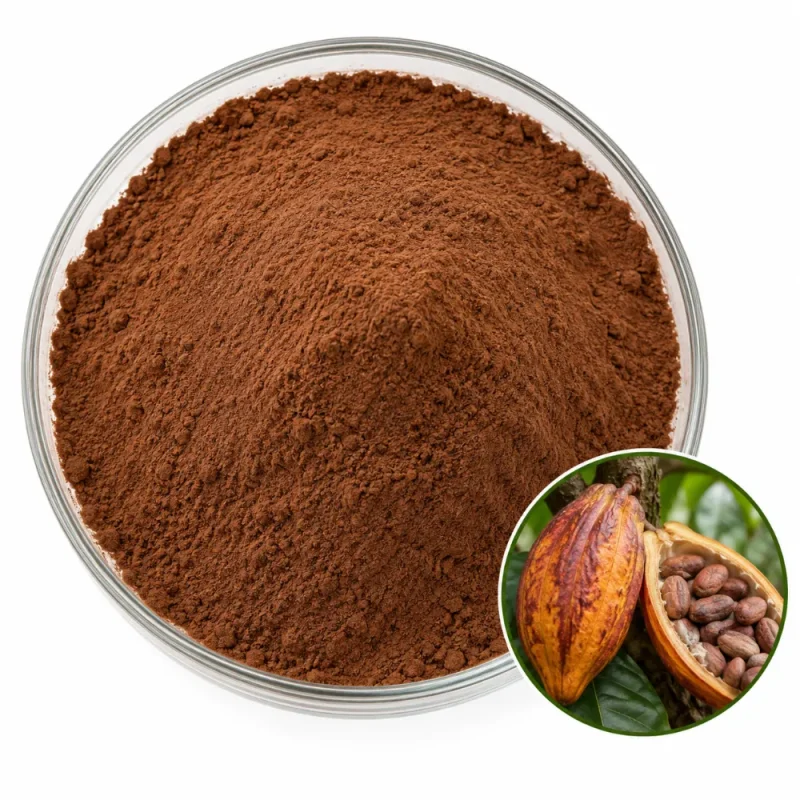
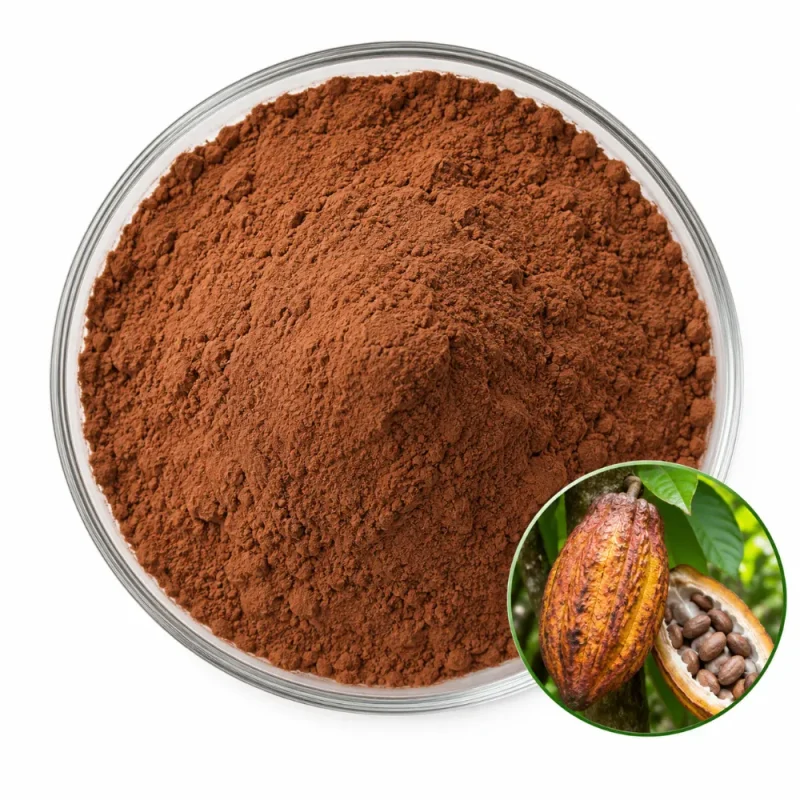
Milled from the seed of Theobroma cacao, cocoa powder is a dry, brown, fat-bearing powder with the bitter, roasted aroma that buyers expect from cocoa. It is milled to 80 mesh and disperses in water without dissolving, so it behaves as a suspended solid in drinks and batters.

The specification covers the species, the seed raw material, the 80-mesh grind, a brown appearance and moisture limited to ≤8.0%. It is supplied for bakery, beverage mixes, plant-based foods and dry blends, where color and flavor depth matter more than solubility.

Cocoa Raw Material Profile

Cocoa powder is made from the seed of Theobroma cacao L., the kernel inside the pod of the cacao tree, commonly called the cocoa bean. The seed, and not the pulp that surrounds it or the husk of the pod, is the raw material. The flavor of cocoa develops after harvest: seeds are fermented and dried, and the colors and aromas that identify cocoa then form during roasting.

Cacao is a botanical relative of cola and baobab and is unrelated to the coca plant, a naming confusion that comes from spelling and has no botanical basis. The seed is rich in fat, known as cocoa butter, and carries starch, fiber, protein and a group of plant compounds that includes flavanols such as catechin and epicatechin, together with the methylxanthines theobromine and caffeine.

Cocoa is a tropical crop harvested as pods, and the seed is only part of the pod’s mass. After fermentation and drying, seeds are cleaned, roasted and cracked, and the kernel pieces are ground. Cocoa powder therefore reflects a chain of processing choices, and the botanical identity, species plus seed, is the constant that the specification fixes.

Two features separate cocoa powders in the trade: fat level and alkalization. Both change color, flavor and dispersion. Alkalized powders are darker, less acidic and disperse more easily than natural powders, and higher-fat powders feel smoother but smear more during milling. Cocoa powder here is identified by species and part, and a buyer who needs a particular fat level or pH should treat it as a separate requirement.
Cocoa Composition & Milling

FormWhat It IsChoose It When
Cocoa PowderMilled cacao seed materialCocoa flavor and color in dry blends
Cocoa Extract PowderWater extract of cacao seed, 10:1 ratioSoluble cocoa notes without cocoa solids
Cocoa Extract 10–40% Flavanols / ProcyanidinsCocoa extract defined by a flavanol assayA marker-defined cocoa ingredient is wanted
Theobromine 99%A single purified methylxanthineA defined compound is needed, not cocoa

Cocoa solids are a composite: starch granules, cell-wall fiber, protein and fat sit together in particles of different size. The fat is the central milling problem. When the seed material is ground finely, cocoa butter is released and coats the particles, so they cling to the mill and to each other, and the powder can pack into lumps and give off a slightly oily feel.

Milling is therefore a balance. A finer grind improves color intensity and smoothness in a drink or filling but increases fat smearing and cohesion, while a coarser grind flows better but looks lighter and feels gritty. The 80-mesh grind sits at the practical middle and gives a free-flowing powder that disperses without noticeable grit in most dry blends.

The comparison table separates cocoa powder from three products made from the same plant. The water extract delivers the soluble part only, the flavanol extract is defined by one marker group, and theobromine is a single compound isolated from the seed, so none of them replaces cocoa solids in a formula.

Typical Specifications

Specification ItemProduct Information
Latin NameTheobroma cacao
Plant PartSeed & Grain
ProcessingMilled
Common NameCocoa
Raw MaterialSeed (cacao bean) kernel material
Ingredient TypeMilled Powder
AppearanceBrown powder
FlavorCharacteristic cocoa aroma; bitter and astringent
Solubility / DispersibilityWater Dispersible
Quality Parameters
Moisture≤8.0% (LOD)
Particle Size80 mesh
Heavy MetalsLead ≤2 ppm · Arsenic ≤1 ppm · Cadmium ≤1 ppm · Mercury ≤0.1 ppm
MicrobiologyTPC ≤10,000 cfu/g · Yeast & Mold ≤1,000 cfu/g · E. coli Negative · Salmonella Negative/25 g
Shelf Life24 months in unopened original packaging, cool and dry storage

Application Areas

Chocolate Beverage Mixes

Cocoa powder gives drink mixes color and flavor depth, and it is dispersed rather than dissolved, so a fraction settles in the cup. Pre-blending with sugar, then mixing into hot liquid, wets the particles and reduces floating lumps, and a stir before drinking redistributes any sediment.

Cakes, Brownies and Biscuits

In baked goods the powder contributes color and a bitter edge that balances sugar. It absorbs water readily, so dough hydration is adjusted when it replaces flour, and sifting it with the flour avoids dark streaks and dry pockets in the finished crumb.

Ice Cream and Dessert Bases

Dispersed in a warm dairy or plant-based base, cocoa powder colors and flavors frozen desserts and puddings. The base should be heated and sheared long enough to wet every particle, since dry clumps survive in the cold mix and appear later as specks.

Fillings, Spreads and Coatings

Fat-based fillings and compound coatings carry cocoa powder as a colorant and flavor source. Its particle size sets the smoothness, so the 80-mesh grind suits fillings that are further refined, and the flavor is checked after the filling has aged for a week.

Handling Notes

Cocoa powder is hygroscopic and cakes if it takes up moisture, so containers should be kept closed and the powder weighed out promptly. Lumps that form in humid air are sifted out before use, and they are best avoided by storing the powder away from steam and cold surfaces where condensation forms.

Cocoa absorbs odors easily, because its fat holds volatile compounds. Storage near spices, cleaning products or strongly scented ingredients can taint the flavor, and the powder should be kept sealed in a cool, dry place away from direct light. After opening, the pack is resealed and the contents used in turn.

Because cocoa powder is a fat-bearing solid, it floats on cold liquids and forms dry-centered lumps. Dispersing it in a small volume of warm liquid first, or blending it with sugar before adding liquid, solves the problem. Dust control matters in open handling, since fine cocoa powder is light and spreads through a room easily.

Temperature cycling should be avoided in storage, because warm and cool swings can bring fat to the surface of the particles and leave a pale, greyish bloom on the powder and on finished products.

Packaging & Commercial Supply

Essencefield supports product evaluation, formulation trials, commercial orders, and ongoing ingredient supply. Packaging, storage, and shipping arrangements are determined by product characteristics, order quantity, stability requirements, and destination-market needs.

Supply ItemGeneral Information
SampleAvailable upon request for formulation, testing, and supplier evaluation
Order Quantities100 g · 1 kg · 5 kg · 25 kg · 100 kg · 500 kg · Bulk
Sample Lead TimeTypically 5–7 days after sample confirmation
Production Lead TimeTypically 15–30 days after order and specification confirmation
PackagingSuitable protective inner packaging with bags, cartons, drums, or other appropriate outer packaging
StorageStore in tightly sealed, suitable protective packaging in a cool, dry environment. Protect from moisture, heat, and direct sunlight. Specific storage conditions follow the approved product specification.
DocumentationCOA · Product Specification · TDS · SDS · Applicable declarations (as applicable)

Final order quantities, lead times, packaging, documentation, and shipping arrangements are confirmed according to the selected product and commercial requirements.

Request Ingredient Specifications & Quote

Share your target specification, application, quantity, and documentation needs. We’ll help confirm suitable options, samples, and commercial supply details.