Naringenin 98%

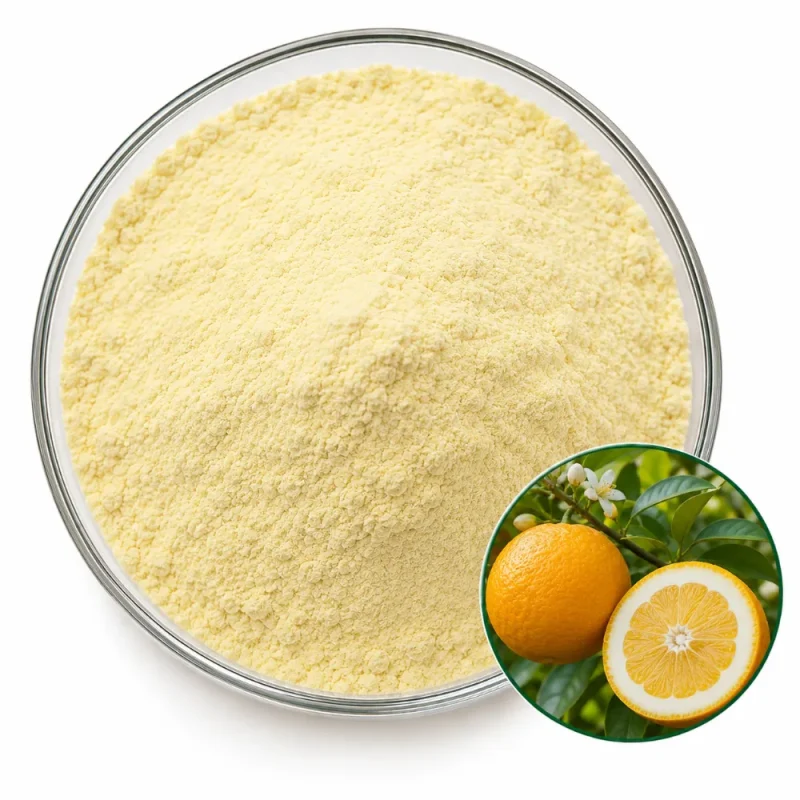
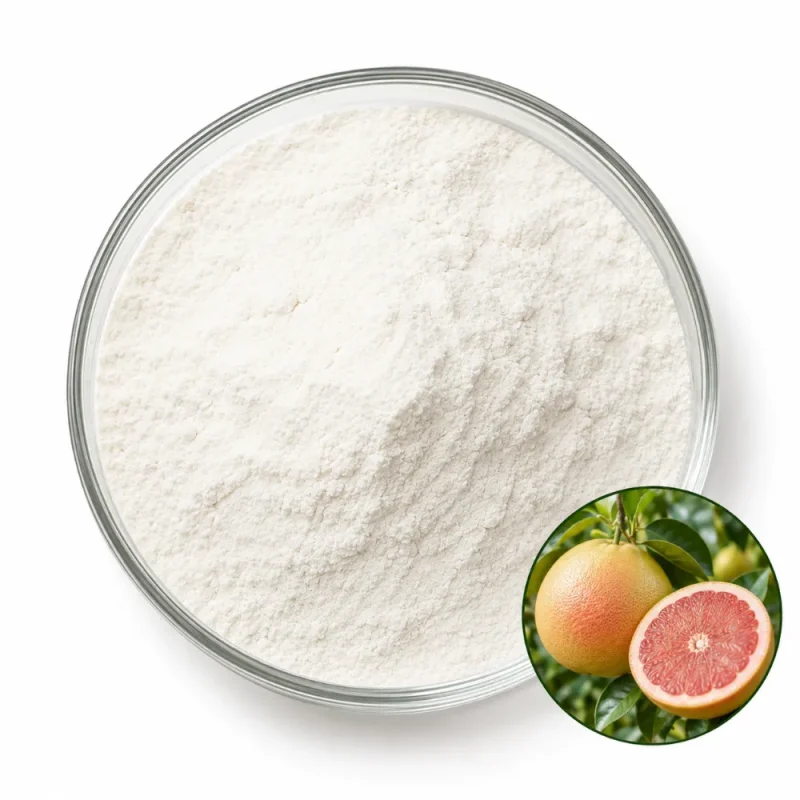
The aglycone of the grapefruit bitter principle naringin, naringenin is isolated here from the peel of Citrus paradisi by ethanol extraction and purification. It is a flavanone with three hydroxyl groups, and it is a white to off-white crystalline powder that does not dissolve in water.

The primary grade is 98% naringenin by HPLC, in Food / Dietary Supplement Grade. Naringenin is the free flavanone, not the bitter glycoside, and the two behave differently in taste, solubility and handling. The choice between the aglycone and its glycosides is made on solubility and taste, and the grade and method decide how a lot is checked on receipt.

Naringenin Chemical Identity

Naringenin has the molecular formula C15H12O5 and a molecular weight of 272.3. It is a flavanone, a flavonoid with a saturated bond between positions 2 and 3, and it carries hydroxyl groups at positions 5, 7 and 4′. The saturated ring creates a stereocenter at C2, and the natural compound is the (2S) form. Because of the stereocenter and the absence of the C2–C3 double bond, naringenin is less flat than the related flavone apigenin, with which it shares the substitution pattern.

In citrus peel the compound is mostly glycosylated. Naringin carries the disaccharide neohesperidose at position 7 and is intensely bitter, while prunin carries a single glucose. The aglycone is obtained by hydrolysis of those glycosides, by acid or by the enzyme naringinase, and then purified. The natural source is the peel of Citrus paradisi Macfad., which GBIF lists as a synonym of Citrus aurantium, and the botanical identity here follows the master record. Related products are Naringin 98%, Prunin 98% and the 10:1 Grapefruit Extract Powder. The glycosides are the bitter, water-soluble forms, whereas naringenin here is the neutral, much less soluble aglycone.

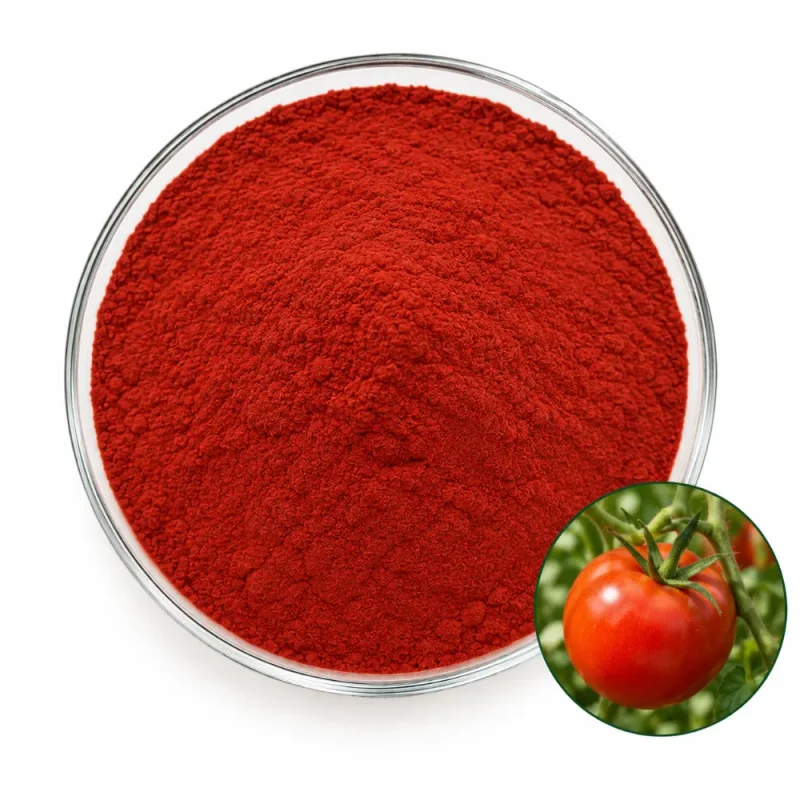
Naringenin is also found in tomato skin and in other fruit, so the source belongs beside the name. The compound here comes from grapefruit peel, where the ratio of glycosides to aglycone depends on ripeness and variety, and the albedo holds more glycoside than the flavedo. A buyer who needs the single aglycone looks for the botanical source, the part and the CAS number together.

Typical Specifications

Specification ItemProduct Information
Natural SourceCitrus paradisi peel
Plant PartFruit & Berry
ProcessingEthanol Extraction & Purification
Compound ClassFlavonoids, Polyphenols
Chemical Name (IUPAC)(2S)-5,7-dihydroxy-2-(4-hydroxyphenyl)-2,3-dihydrochromen-4-one
CAS Number480-41-1
Molecular FormulaC15H12O5
Molecular Weight272.25
PubChem CID439246
InChIKeyFTVWIRXFELQLPI-ZDUSSCGKSA-N
SMILESC1C(OC2=CC(=CC(=C2C1=O)O)O)C3=CC=C(C=C3)O
Purity98% (HPLC)
GradeFood / Dietary Supplement Grade
AppearanceWhite powder
Solubility / DispersibilityInsoluble in Water
Quality Parameters
Moisture (LOD)≤5.0%
Total Ash≤5.0%
Heavy MetalsLead ≤2 ppm · Arsenic ≤1 ppm · Cadmium ≤1 ppm · Mercury ≤0.1 ppm
MicrobiologyTPC ≤1,000 cfu/g · Yeast & Mold ≤100 cfu/g · E. coli Negative · Salmonella Negative/25 g
Shelf Life24 months in unopened original packaging, cool and dry storage

Naringenin Purity Grades & Impurities

The 98% figure is an HPLC result that compares the naringenin peak with the other detected peaks, usually at a wavelength near 290 nm where flavanones absorb. It leaves out water, ash and any component that does not absorb, so moisture and ash are limited separately in the table. There is a single grade for this product, and no table of alternatives.

The related substances of a citrus-derived flavanone are its glycosides and its close relatives. Residual naringin and prunin indicate incomplete hydrolysis and are the first peaks to check, since they are more polar and elute early. Hesperetin and eriodictyol are the neighboring aglycones, and the free chalcone form can appear because the flavanone ring opens in alkaline conditions. Isosakuranetin, the 4′-methyl ether of naringenin, is a possible trace.

Stereochemistry is the particular point for this compound. The ring-opening and closing equilibrium can racemize the C2 center, so a lot that has been treated with heat or alkali may contain the (2R) form, which an ordinary HPLC column does not separate from the (2S) form. Enantiomeric composition is checked with a chiral column or by optical rotation when it matters. Bitterness is also informative, since residual naringin tastes strongly bitter even at low level, while the aglycone is far less so, and a bitter taste on a small sample points to incomplete conversion.

Naringenin Solubility & Delivery

Naringenin is practically insoluble in water and dissolves in ethanol, acetone, dimethyl sulfoxide and dilute alkali. The three hydroxyls form hydrogen bonds in the crystal, and the compound is moderately lipophilic, so it favors lipid and surfactant phases over water. In alkaline solution it dissolves and then degrades by ring opening, so alkaline stock solutions are made fresh and used promptly.

Delivery therefore depends on dispersion. Fine milling, wetting agents, cyclodextrin complexes and oil or surfactant systems are the approaches in the literature. Cyclodextrin complexation is especially described for naringenin, because the molecule fits the cavity well. In dry blends, the powder is stable and free flowing, though static and cohesion can disturb accurate weighing of small amounts, and a two-stage premix with a dry carrier gives a more uniform result.

Taste is a practical point. Naringin is among the most bitter flavonoids and the aglycone is much less so, yet a trace of residual glycoside is enough to give a bitter note in a small sample, so taste is a quick screen for incomplete conversion. Because the compound hardly dissolves in the mouth, powder in a capsule is not tasted, while in a drink base any dissolved portion is.

Application Areas

Capsule Fills of the Aglycone

Capsules take naringenin at low to moderate inclusion with a steady fill weight. The off-white crystals flow adequately, but static clings to scoops, so anti-static tools and a flow agent in a sieved premix give an even fill weight from lot to lot.

Cyclodextrin Complex Systems

Cyclodextrin complexes are used to raise the dispersion of the insoluble aglycone. The complex is built in a water-ethanol step, dried and milled, and a retained sample of each lot lets the formulator compare dissolution when the process is repeated at a larger scale.

Tablet Blends With Wetting Agents

Tablets press naringenin with a dry binder, a lubricant and a wetting agent to help the hydrophobic crystal release. A disintegration trial on the full blend confirms release, and moisture-limited storage keeps hardness stable through storage.

Citrus Flavanone Comparison Blends

Blends with naringin and prunin show how the aglycone and its glycosides differ in taste and solubility. Each ingredient is weighed on its own, the premix is built in steps, and the HPLC trace confirms that no hydrolysis has shifted the ratio during storage.

Packaging & Commercial Supply

Essencefield supports product evaluation, formulation trials, commercial orders, and ongoing ingredient supply. Packaging, storage, and shipping arrangements are determined by product characteristics, order quantity, stability requirements, and destination-market needs.

Supply ItemGeneral Information
SampleAvailable upon request for formulation, testing, and supplier evaluation
Order Quantities100 g · 1 kg · 5 kg · 25 kg · 100 kg · 500 kg · Bulk
Sample Lead TimeTypically 5–7 days after sample confirmation
Production Lead TimeTypically 15–30 days after order and specification confirmation
PackagingSuitable protective inner packaging with bags, cartons, drums, or other appropriate outer packaging
StorageStore in tightly sealed, suitable protective packaging in a cool, dry environment. Protect from moisture, heat, and direct sunlight. Specific storage conditions follow the approved product specification.
DocumentationCOA · Product Specification · TDS · SDS · Applicable declarations (as applicable)

Final order quantities, lead times, packaging, documentation, and shipping arrangements are confirmed according to the selected product and commercial requirements.

Request Ingredient Specifications & Quote

Share your target specification, application, quantity, and documentation needs. We’ll help confirm suitable options, samples, and commercial supply details.