20-Hydroxyecdysone (Ecdysterone) 98%

Made by plants as a defense against insects, 20-hydroxyecdysone is isolated here from the root of Cyanotis arachnoidea by ethanol extraction and purification. It is the best-known phytoecdysteroid, a polyhydroxylated steroid that is chemically the same molecule as the molting hormone of arthropods.

The primary grade is 98% 20-hydroxyecdysone by HPLC, with 90% and 95% grades also supplied, in Food / Dietary Supplement Grade. The white powder is slightly soluble in water. The name ecdysterone is a synonym, and the 20 in the name is the position of the extra hydroxyl that distinguishes it from the simpler ecdysone.

20-Hydroxyecdysone Chemical Identity

20-Hydroxyecdysone has the molecular formula C27H44O7 and the molecular weight 480.6. The skeleton is a cholestane steroid with a conjugated enone, a ketone at C6 beside a double bond at C7–C8, and a cis A/B ring junction. Hydroxyl groups at C2, C3, C14, C20, C22 and C25 make the molecule very polar for a steroid, with six hydroxyl groups on a skeleton of 27 carbons. The 20-hydroxy group is the one added to ecdysone, and it is what gives the compound its name.

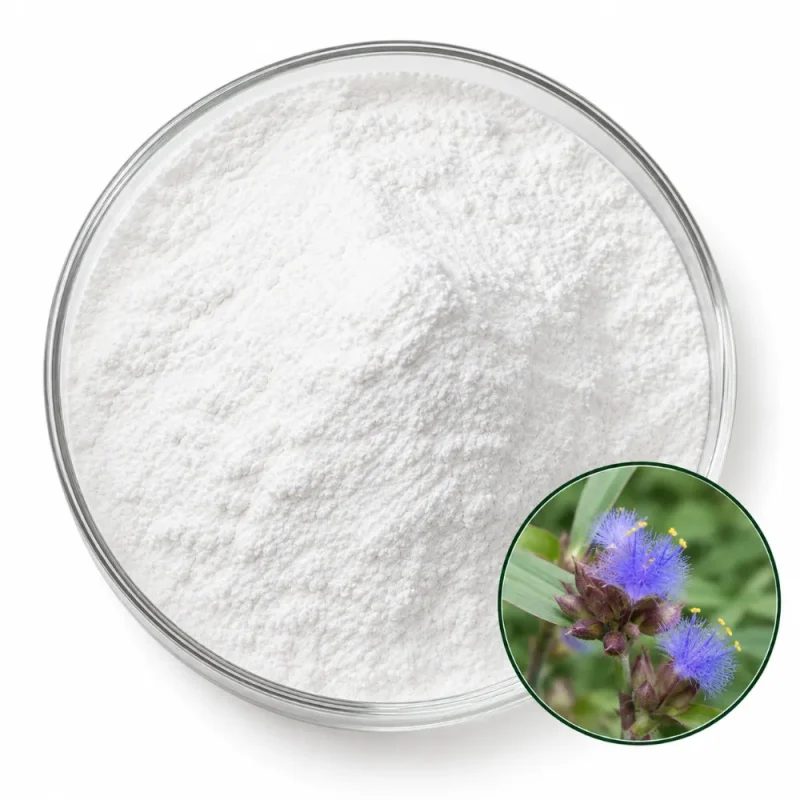
The natural source is the root of Cyanotis arachnoidea C.B.Clarke, a plant of the family Commelinaceae that is the main commercial route to 20-hydroxyecdysone. Phytoecdysteroids also occur in spinach, in species of Ajuga and Rhaponticum, and in quinoa, so the botanical source and part belong beside the name. A related product is Cyanotis arachnoidea Extract 10–90% Ecdysteroids, which is a mixture of ecdysteroids from the same root and is defined by the group and not by one molecule.

The name is easily confused with ecdysone, which has one fewer hydroxyl, and with turkesterone, which carries one more. All three are ecdysteroids with similar skeletons, so the formula, the CAS number and the retention time are the reliable identifiers.

Typical Specifications

Specification ItemProduct Information
Natural SourceCyanotis arachnoidea root
Plant PartRoot & Rhizome
ProcessingEthanol Extraction & Purification
Compound ClassTerpenoids
Chemical Name (IUPAC)(2S,3R,5R,9R,10R,13R,14S,17S)-2,3,14-trihydroxy-10,13-dimethyl-17-[(2R,3R)-2,3,6-trihydroxy-6-methylheptan-2-yl]-2,3,4,5,9,11,12,15,16,17-decahydro-1H-cyclopenta[a]phenanthren-6-one
CAS Number5289-74-7
Molecular FormulaC27H44O7
Molecular Weight480.6
PubChem CID5459840
InChIKeyNKDFYOWSKOHCCO-YPVLXUMRSA-N
SMILESCC12CCC3C(=CC(=O)C4C3(CC(C(C4)O)O)C)C1(CCC2C(C)(C(CCC(C)(C)O)O)O)O
Purity98% (HPLC)
Available Grades90% · 95% · 98% (HPLC)
GradeFood / Dietary Supplement Grade
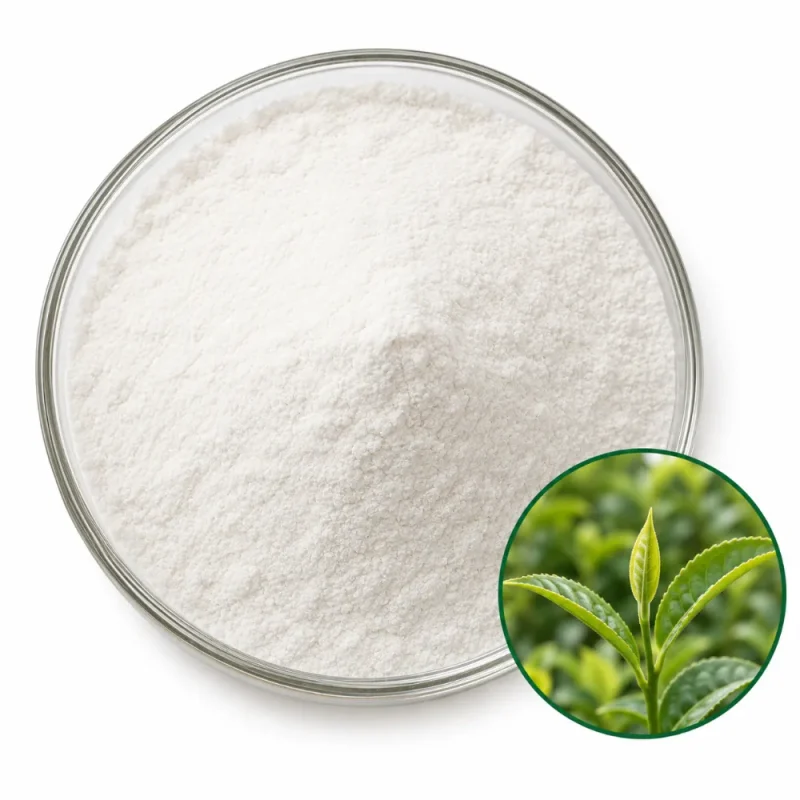
AppearanceWhite powder
Solubility / DispersibilitySlightly Soluble in Water
Quality Parameters
Moisture (LOD)≤5.0%
Total Ash≤5.0%
Heavy MetalsLead ≤2 ppm · Arsenic ≤1 ppm · Cadmium ≤1 ppm · Mercury ≤0.1 ppm
MicrobiologyTPC ≤1,000 cfu/g · Yeast & Mold ≤100 cfu/g · E. coli Negative · Salmonella Negative/25 g
Shelf Life24 months in unopened original packaging, cool and dry storage

20-Hydroxyecdysone Purity Grades & Impurities

GradeAssay & MethodWhere It Fits
90% 20-HydroxyecdysoneHPLCPremixes and dry blends
95% 20-HydroxyecdysoneHPLCCapsules and tablets
98% 20-HydroxyecdysoneHPLCReference-grade and clear solutions

The HPLC assay measures the 20-hydroxyecdysone peak against a reference standard at about 245 nm, where the enone chromophore absorbs, and the percentage compares that peak with the other detected peaks. It leaves out water, ash and components without absorbance. Method choice matters for ecdysteroids, because normalized area and external standard calculations can differ widely for the same lot, and published work has shown that commercial extracts sold under the same name can contain very different amounts.

The related substances of 20-hydroxyecdysone are the other ecdysteroids of the root. Ecdysone, polypodine B, 20,26-dihydroxyecdysone and ajugasterone C are close structural neighbors that differ by one hydroxyl or by the position of one, and they elute near the main peak. The reference standard and the column therefore determine whether the neighbors are resolved. Stachysterone and other side-chain variants appear at trace level.

Stability is the other feature that sets this compound apart. Research on 20-hydroxyecdysone has reported that it undergoes autoxidation and forms ecdysteroids that are not yet characterized, so the age and storage of a lot can alter the impurity profile even when the main peak stays high. The 90%, 95% and 98% grades differ in the share of such companions and degradation products. A white powder is the sign of a clean lot, while a yellow or brown tint suggests oxidation or residual root pigment.

20-Hydroxyecdysone Solubility & Delivery

20-Hydroxyecdysone is slightly soluble in cold water and more soluble in hot water, and it dissolves in ethanol, methanol and dimethyl sulfoxide. The six hydroxyl groups make it unusually polar for a steroid, which explains the partial water solubility, while the steroid core keeps it from dissolving freely. It does not dissolve well in nonpolar solvents or oils, and its logP is low for a steroid.

Delivery follows from this polarity. 20-Hydroxyecdysone can be dissolved in warm water or aqueous ethanol and then diluted, and clear liquid products are possible at modest strength, although a supersaturated solution may deposit crystals on standing. Oxidation is the stability risk, so a mildly acidic pH, low headspace and opaque packaging help in liquid systems. In dry blends the powder is stable and moderately free flowing, and weighing is made easier by a two-stage premix with a dry carrier. Because the molecule is not lipophilic, oil-based fills are less suitable than dry or aqueous systems.

Polarity makes 20-hydroxyecdysone one of the few steroids that can be handled in a water-phase process. A warm stock made in water or aqueous ethanol can be filtered to remove insoluble matter, cooled to the fill temperature and checked under magnification for crystals, which is a practical test of whether a clear product will stay clear. Concentrations near the solubility limit crystallize on standing in the cold, so a margin below saturation is kept in the formula, and a cold-storage trial of the finished 20-hydroxyecdysone liquid precedes release.

Application Areas

Capsule Fills at the 95% Grade

Capsules take 95% 20-hydroxyecdysone at low to moderate inclusion. The crystalline powder flows adequately, though static clings to scoops, so anti-static tools and a sieved premix give an even fill weight, and a dry room limits moisture pickup.

Warm-Dissolved Drink Concentrates

Concentrates dissolve 20-hydroxyecdysone in warm water or aqueous ethanol and cool to the fill temperature. Hold the solution at a mildly acidic pH, fill under low oxygen, and check for crystals after a week of cold storage.

Dry-Binder Tablets for Polar Steroids

Tablets press 95% 20-hydroxyecdysone with a dry binder and a lubricant. The powder compresses well, but oxidation darkens it in humid rooms, so storage under a desiccant and a color check after a month are part of the trial.

Powder Stick Premixes

Sticks carry 90% 20-hydroxyecdysone in dry premixes with a sweetener and an acid. The premix is sieved to remove lumps, blended in steps and packed with a desiccant, because moisture accelerates the slow oxidation of the powder.

Method Reference Standards

Analytical teams use the 98% grade to confirm that a method separates ecdysone, polypodine B and 20-hydroxyecdysone. The standard is stored dry and cold, and a retained sample from each lot is kept so that the impurity profile can be compared over time.

Packaging & Commercial Supply

Essencefield supports product evaluation, formulation trials, commercial orders, and ongoing ingredient supply. Packaging, storage, and shipping arrangements are determined by product characteristics, order quantity, stability requirements, and destination-market needs.

Supply ItemGeneral Information
SampleAvailable upon request for formulation, testing, and supplier evaluation
Order Quantities100 g · 1 kg · 5 kg · 25 kg · 100 kg · 500 kg · Bulk
Sample Lead TimeTypically 5–7 days after sample confirmation
Production Lead TimeTypically 15–30 days after order and specification confirmation
PackagingSuitable protective inner packaging with bags, cartons, drums, or other appropriate outer packaging
StorageStore in tightly sealed, suitable protective packaging in a cool, dry environment. Protect from moisture, heat, and direct sunlight. Specific storage conditions follow the approved product specification.
DocumentationCOA · Product Specification · TDS · SDS · Applicable declarations (as applicable)

Final order quantities, lead times, packaging, documentation, and shipping arrangements are confirmed according to the selected product and commercial requirements.

Request Ingredient Specifications & Quote

Share your target specification, application, quantity, and documentation needs. We’ll help confirm suitable options, samples, and commercial supply details.