Amarogentin 98%

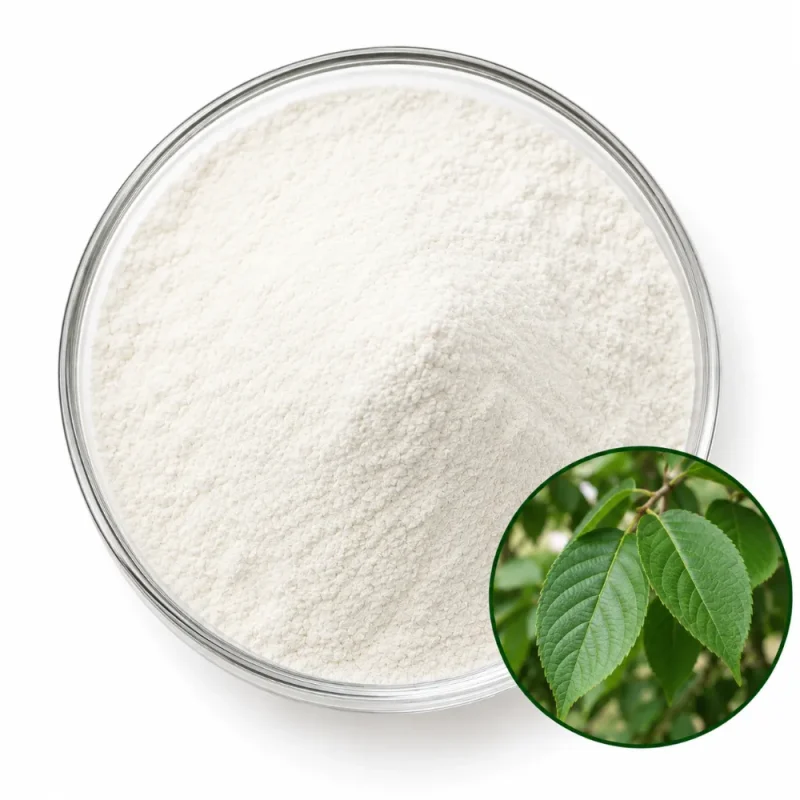
Named for its extreme bitterness, amarogentin is isolated here from the aerial parts of Swertia chirayita by ethanol extraction and purification. It is a secoiridoid glycoside whose sugar carries an aromatic ester, and it is a slightly water soluble, off-white powder.

The primary grade is 98% amarogentin by HPLC, in Food / Dietary Supplement Grade. Chirata, the common name of the plant, covers several bitter herbs of the gentian family, so the botanical source and the compound name together are the identity of this product.

Amarogentin Chemical Identity

Amarogentin has the molecular formula C29H30O13 and a molecular weight of 586.5. The skeleton is a secoiridoid, an iridoid in which the five-membered ring has been opened, joined to a glucose through an acetal and esterified on the sugar with a hydroxylated biphenyl carboxylic acid. That aromatic ester, a 2,4-dihydroxy-6-(3-hydroxyphenyl)benzoate, distinguishes amarogentin from the simpler secoiridoids of the same plant, and it is the part of the molecule linked to the extremely bitter taste for which the compound is known.

The natural source is the aerial parts, the leaf and stem, of Swertia chirayita (Roxb.) H.Karst., a Himalayan herb of the family Gentianaceae. Its bitter principles include amarogentin, swertiamarin and sweroside, together with xanthones such as swerchirin. Related products are Swertia Chirayita Extract 5–50% Swertiamarin, the 10:1 Swertia Chirata Extract Powder and the xanthone Swerchirin 98%. The extracts are defined by other markers, and amarogentin here is a single compound.

Several plants are sold as chirata, and the genus Swertia holds many species. Other bitter gentians contain amarogentin as well, notably the true gentian root, so the source statement belongs beside the name.
Typical Specifications

Specification ItemProduct Information
Natural SourceSwertia chirayita aerial parts
Plant PartLeaf & Herb
ProcessingEthanol Extraction & Purification
Compound ClassIridoids, Terpenoids
Chemical Name (IUPAC)[(2S,3R,4S,5S,6R)-2-[[(3S,4R,4aS)-4-ethenyl-8-oxo-4,4a,5,6-tetrahydro-3H-pyrano[3,4-c]pyran-3-yl]oxy]-4,5-dihydroxy-6-(hydroxymethyl)oxan-3-yl] 2,4-dihydroxy-6-(3-hydroxyphenyl)benzoate
CAS Number21018-84-8
Molecular FormulaC29H30O13
Molecular Weight586.5
PubChem CID115149
InChIKeyDBOVHQOUSDWAPQ-WTONXPSSSA-N
SMILESC=CC1C2CCOC(=O)C2=COC1OC3C(C(C(C(O3)CO)O)O)OC(=O)C4=C(C=C(C=C4O)O)C5=CC(=CC=C5)O
Purity98% (HPLC)
GradeFood / Dietary Supplement Grade
AppearanceOff-White powder
Solubility / DispersibilitySlightly Soluble in Water
Quality Parameters
Moisture (LOD)≤5.0%
Total Ash≤5.0%
Heavy MetalsLead ≤2 ppm · Arsenic ≤1 ppm · Cadmium ≤1 ppm · Mercury ≤0.1 ppm
MicrobiologyTPC ≤1,000 cfu/g · Yeast & Mold ≤100 cfu/g · E. coli Negative · Salmonella Negative/25 g
Shelf Life24 months in unopened original packaging, cool and dry storage

Amarogentin Purity Grades & Impurities

The 98% figure is an HPLC result that compares the amarogentin peak with the other detected peaks, with detection near 270 nm, where the biphenyl ester absorbs better than the sugar-bearing iridoid core. Water, ash and components without a response lie outside the figure, which is why the table lists moisture and ash separately. One grade is offered.

The related substances are the other bitter glycosides of the herb. Swertiamarin and sweroside lack the aromatic ester, are more polar and elute earlier. Amaroswerin, the other acylated secoiridoid, is the nearest neighbor and has to be resolved from amarogentin. Xanthones such as swerchirin and the C-glycoside flavone swertisin are removed by purification and appear as late or well-separated peaks. Gentiopicroside, characteristic of the true gentian roots, may appear in trace amounts depending on the botanical origin.

Stability is a quality theme because the molecule has an ester, an acetal and a dihydropyran ring. Hydrolysis frees the aromatic acid and the sugar-bearing core, and the free acid shows as an early peak in lots stored damp. Light and heat also darken the powder from white to tan. Because bitterness is so intense, a few micrograms are noticeable, and so a tasted trace of residual bitter glycoside in a nominally different compound is a practical check on cross-contamination in the plant.

Plant-derived and synthetic amarogentin share a main peak, but total synthesis of the compound is complex, so the supply is almost entirely plant-derived. The botanical source and part are stated for that reason.

Amarogentin Solubility & Delivery

Amarogentin is slightly soluble in water and dissolves in methanol, ethanol and dimethyl sulfoxide. The glucose gives it some polarity, while the biphenyl ester makes it more lipophilic than the simple secoiridoids, so it partitions into aqueous alcohol and into surfactant phases. Dilute solutions are clear, and concentrated ones may deposit crystals on standing.

Delivery is shaped by its taste as much as its solubility. Even at tiny weights, the compound is intensely bitter, and a dry blend that leaves residue on equipment can taint the next product. Closed transfer, dedicated scoops and a rinse step prevent cross-contamination. In liquids, a mildly acidic pH protects the ester, and cool storage slows hydrolysis. Micro-dosing is the practical difficulty, so a stepwise dilution in a dry carrier gives accurate weights, and the premix is sieved to avoid concentrated specks that would be tasted. Static can disturb weighing, and anti-static tools help.

Taste testing is not a routine release method for a pure bitter glycoside, yet it explains why handling rules are strict. A weighing room that has handled amarogentin leaves a faint residue on balances and gloves, and the next product weighed there can pick it up. Dedicated tools, a wipe-down with ethanol between products and a clean-room log of each use keep the residue from becoming a quality complaint, and the same rules apply to the premix blender.

Application Areas

Dilute Premixes for Capsules

Capsules take amarogentin only at very low inclusion. A stepwise premix in a dry carrier gives uniform weight, and a dedicated filling line with a rinse step prevents the intense bitterness from carrying into the next product.

Hydroalcoholic Concentrates

Concentrates dissolve the glycoside in aqueous ethanol at a modest level and are diluted into the base. Hold the pH mildly acidic, store cool, and check for crystals after a week in the cold, since a concentrated solution can deposit solid.

Tablet Blends at Trace Level

Tablets press the glycoside as a trace constituent in a larger blend. A dry binder, a sieved premix and a content-uniformity check across the batch show whether the micro-dose is spread evenly, and a coat limits any taste.

Bitter Principle Comparison Blends

Formulators studying the bitter principles of chirata blend amarogentin with swertiamarin and sweroside in fixed ratios. Each ingredient is weighed on its own, and the HPLC trace of the blend confirms that the ratios have not shifted.

Reference Standards for Gentian-Family Herbs

Analytical teams use the 98% grade as an anchor peak in fingerprints of Swertia and Gentiana extracts. The standard is stored dry and cold, and a retained sample of each lot preserves the record of retention time.

Packaging & Commercial Supply

Essencefield supports product evaluation, formulation trials, commercial orders, and ongoing ingredient supply. Packaging, storage, and shipping arrangements are determined by product characteristics, order quantity, stability requirements, and destination-market needs.

Supply ItemGeneral Information
SampleAvailable upon request for formulation, testing, and supplier evaluation
Order Quantities100 g · 1 kg · 5 kg · 25 kg · 100 kg · 500 kg · Bulk
Sample Lead TimeTypically 5–7 days after sample confirmation
Production Lead TimeTypically 15–30 days after order and specification confirmation
PackagingSuitable protective inner packaging with bags, cartons, drums, or other appropriate outer packaging
StorageStore in tightly sealed, suitable protective packaging in a cool, dry environment. Protect from moisture, heat, and direct sunlight. Specific storage conditions follow the approved product specification.
DocumentationCOA · Product Specification · TDS · SDS · Applicable declarations (as applicable)

Final order quantities, lead times, packaging, documentation, and shipping arrangements are confirmed according to the selected product and commercial requirements.

Request Ingredient Specifications & Quote

Share your target specification, application, quantity, and documentation needs. We’ll help confirm suitable options, samples, and commercial supply details.