Alisol A 98%

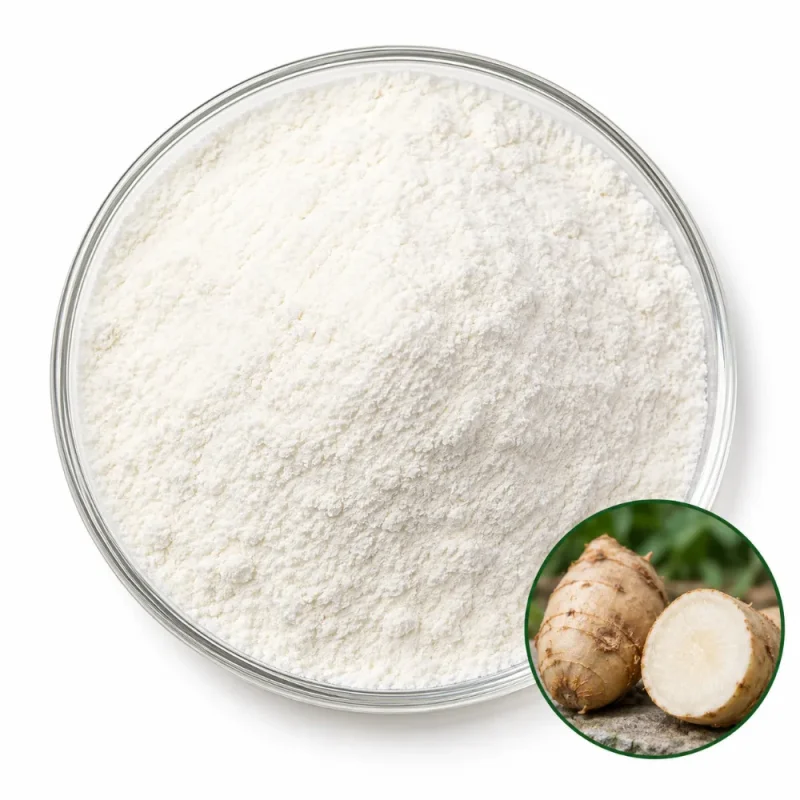
Triterpenoid alcohols from Alisma rhizome (Alisma orientale) begin with alisol A, the triol parent whose side chain carries three hydroxyl groups, isolated by ethanol extraction and purification. It is supplied as a white powder that is insoluble in water.

The Primary Grade is 98% alisol A by HPLC, in Food / Dietary Supplement Grade. The figure describes the free alcohol, not its 24-acetate, and the CAS number and InChIKey in the table apply to the alcohol only. Acetylated alisols are listed as separate products.

Alisol A Chemical Identity

Alisol A (C30H50O5, molecular weight 490.7) is a tetracyclic protostane triterpenoid with a ketone at carbon 3, a hydroxyl at carbon 11 and a side chain that ends in three hydroxyl groups at carbons 23, 24 and 25. Those three hydroxyls make it more polar than the acetates and the epoxide forms of the same family. Compared with alisol B (C30H48O4) it has one more water molecule in the formula, because the epoxide of alisol B corresponds to a ring-closed form of a diol.

The raw material is the rhizome of Alisma orientale (Sam.) Juz. (Alismataceae), which current checklists treat as a synonym of Alisma plantago-aquatica; the trade name is retained. Leaves and the aerial parts are not used.

The closest relatives are Alisol A 24-Acetate 98%, where one hydroxyl is esterified, and the whole-rhizome products Alisma rhizome extract powder and Alisma rhizome powder. A buyer who writes alisol A in an order without the grade and CAS number leaves open whether the alcohol or an acetate is meant.

Alisol A is also the name that appears at the start of several derivative names, which causes confusion in searches. Alisol A 24-acetate and alisol A 23-acetate carry an ester, while alisol A alone is the free alcohol. A specification that gives the CAS number 19885-10-0 and the HPLC grade identifies the alcohol and excludes both esters.

Typical Specifications

Specification ItemProduct Information
Natural SourceAlisma orientale rhizome
Plant PartRoot & Rhizome
ProcessingEthanol Extraction & Purification
Compound ClassTerpenoids
Chemical Name (IUPAC)(5R,8S,9S,10S,11S,14R)-11-hydroxy-4,4,8,10,14-pentamethyl-17-[(2R,4S,5R)-4,5,6-trihydroxy-6-methylheptan-2-yl]-1,2,5,6,7,9,11,12,15,16-decahydrocyclopenta[a]phenanthren-3-one
CAS Number19885-10-0
Molecular FormulaC30H50O5
Molecular Weight490.7 g/mol
PubChem CID15558616
InChIKeyHNOSJVWYGXOFRP-UNPOXIGHSA-N
Purity98% (HPLC)
GradeFood / Dietary Supplement Grade
AppearanceWhite powder
Solubility / DispersibilityInsoluble in Water
Quality Parameters
Moisture (LOD)≤5.0%
Total Ash≤5.0%
Heavy MetalsLead ≤2 ppm · Arsenic ≤1 ppm · Cadmium ≤1 ppm · Mercury ≤0.1 ppm
MicrobiologyTPC ≤1,000 cfu/g · Yeast & Mold ≤100 cfu/g · E. coli Negative · Salmonella Negative/25 g
Shelf Life24 months in unopened original packaging, cool and dry storage

Alisol A Purity & Related Substances

Alisol A 98% is a single-compound grade measured by HPLC. The value expresses the alisol A peak as a proportion of the chromatogram, with water, ash and material that does not absorb left out. Because protostane triterpenoids absorb weakly in the ultraviolet, a method often uses low-wavelength detection or a light-scattering detector, and the detector choice should be stated when two certificates are compared.

The related substances are the acetylated alisols, especially alisol A 24-acetate and alisol B 23-acetate, together with alisol B and the alisol C family. The acetates are less polar and elute later on a reversed-phase column, while alisol A, as the free triol, elutes earlier. Free alisol A can also grow in an aging sample of an acetate through hydrolysis, so its presence in a high-purity lot indicates clean handling.

The compound is isolated from the rhizome by ethanol extraction and purification, with no synthetic step described. A total alisol content from an extract is a different quantity and cannot stand in for this purity.

Inspection of an alisol A lot benefits from a water check and a look at the late-eluting region of the chromatogram. Peaks after alisol A would be acetates, which are less polar, and their size shows whether the lot has been processed from a mixed fraction. A lot with a single clean peak and low water suits a single-compound specification.

Alisol A Solubility & Delivery

Alisol A is insoluble in water, although the three hydroxyl groups make it more polar than the acetylated alisols. It dissolves in ethanol, methanol and other polar organic solvents, and it can be dispersed in lipids with a surfactant. In water it forms a loose white suspension that settles when left standing.

Delivery in principle uses co-solvent premixes, phospholipid or cyclodextrin complexes, oil-phase dispersions and micronized powders. The side-chain hydroxyl groups can form hydrogen bonds with polar excipients, so wetting is somewhat easier than with the esters. The free triol is chemically less reactive than the epoxide forms, which makes neutral aqueous mixing less risky.

The powder is fine and may carry static charge. Closed transfer and a dry weighing area keep the dose accurate, and a dilution premix improves uniformity. Opaque containers are a precaution, not a requirement, since the compound has no strongly light-sensitive chromophore.

Because the molecule has three free hydroxyl groups, it also interacts with polar excipients such as polyethylene glycol and glycerol, which can serve as wetting carriers. A premix made by adding alisol A to a small amount of glycol and then to the bulk gives better dispersion than direct addition of dry powder.

Application Areas

Hard capsules with premixing

Alisol A is dosed in small weights, so a premix with a free-flowing excipient gives uniform fills. Fill weights are sampled during the run, and a dry room keeps the fine white powder from clumping on the hopper.

Softgels and lipid dispersions

A dispersion of alisol A in oil with a surfactant gives a stable softgel fill. The tank is stirred while capsules are formed, and the fill is sampled for homogeneity before the run continues to the end.

Tablets with wetting agents

In tablets alisol A is diluted with filler and binder, and a wetting agent aids disintegration of the insoluble matrix. A content uniformity check confirms that the small dose is spread evenly through the compressed units.

Powder sticks with dispersants

Sticks stirred into water need a dispersant so that the insoluble powder remains suspended. Settling and visible specks are checked after the stick has been standing in a glass, and the flavor system is tuned for the mild bitterness.

Glycol-based liquid premixes

A premix of alisol A in glycerol or propylene glycol, diluted into a drink concentrate, uses the three hydroxyl groups for wetting. The concentrate is checked for haze after cold storage, and the glycol level is set so that the label and the final product limits are both met.

Packaging & Commercial Supply

Essencefield supports product evaluation, formulation trials, commercial orders, and ongoing ingredient supply. Packaging, storage, and shipping arrangements are determined by product characteristics, order quantity, stability requirements, and destination-market needs.

Supply ItemGeneral Information
SampleAvailable upon request for formulation, testing, and supplier evaluation
Order Quantities100 g · 1 kg · 5 kg · 25 kg · 100 kg · 500 kg · Bulk
Sample Lead TimeTypically 5–7 days after sample confirmation
Production Lead TimeTypically 15–30 days after order and specification confirmation
PackagingSuitable protective inner packaging with bags, cartons, drums, or other appropriate outer packaging
StorageStore in tightly sealed, suitable protective packaging in a cool, dry environment. Protect from moisture, heat, and direct sunlight. Specific storage conditions follow the approved product specification.
DocumentationCOA · Product Specification · TDS · SDS · Applicable declarations (as applicable)

Final order quantities, lead times, packaging, documentation, and shipping arrangements are confirmed according to the selected product and commercial requirements.

Request Ingredient Specifications & Quote

Share your target specification, application, quantity, and documentation needs. We’ll help confirm suitable options, samples, and commercial supply details.