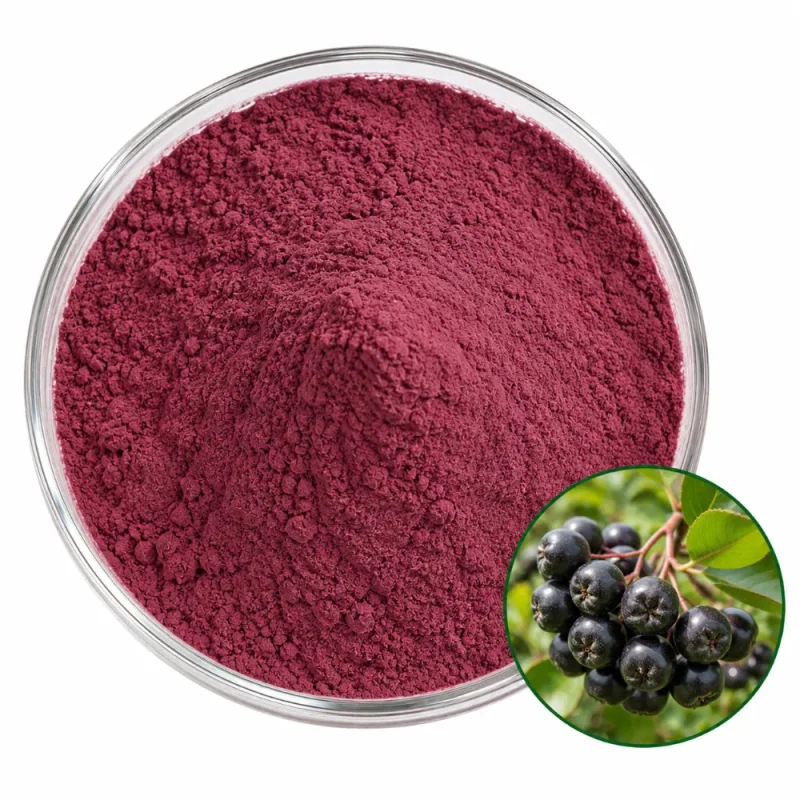
Aronia Berry Powder

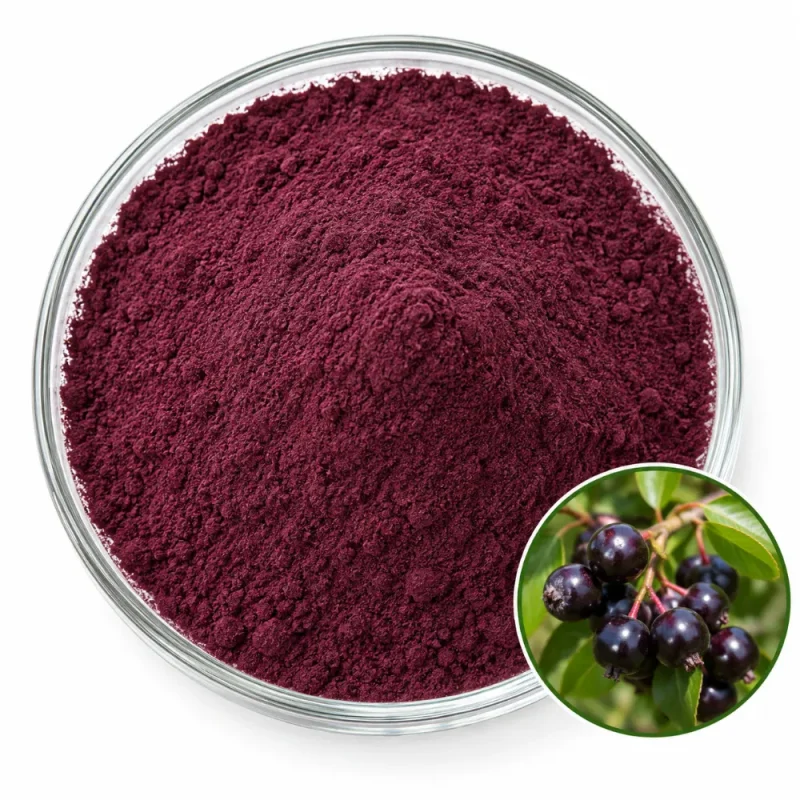
Aronia berries, the near-black fruit of the shrub Aronia melanocarpa also called black chokeberry, are pressed, and their juice is concentrated and spray-dried onto a maltodextrin carrier to give this deep purple-red powder. The raw material is the juice of the ripe berry, so seeds and stems are not part of it.

Aronia berry powder dissolves in water to a dark, ruby liquid and has a tart, strongly astringent taste with a dry finish. It differs from freeze-dried aronia berry powder, which keeps the skin, pulp and fiber, and from the standardized extract, which is concentrated around a defined anthocyanin level.

Aronia Juice Powder Processing

The species is Aronia melanocarpa (Michx.) Elliott, family Rosaceae, known as black chokeberry or aronia. The word chokeberry points to the dry, puckering taste, which comes from tannins. Red chokeberry, Aronia arbutifolia, and purple chokeberry are related, and the black fruit is distinguished by its dark skin and juice. Aronia is not related to blueberry, bilberry or elderberry, even though all of them are dark.

The raw material is aronia juice concentrate. The berries are crushed and pressed, and the dark juice is concentrated, mixed with maltodextrin and spray-dried. The carrier keeps the powder free-flowing and soluble and it softens the sharp, astringent edge of the juice a little, although the dry, puckering character of aronia remains clear and is the main reason for using sweeteners or milder fruit powders next to it.

Black chokeberry juice is exceptionally dark. The pigment sits in both the skin and the pulp, which means that the juice powder keeps a high color intensity at low use levels, and this is a practical advantage in products where tint matters.

Aronia is a hardy shrub of cold climates, and the berries are harvested when fully black and slightly soft. Late harvest raises sugar and color, and juice from late fruit is less harsh than from early fruit, although the astringent character never disappears. The fruit is small, with a thin skin and a waxy bloom.
Aronia Flavor, Color & Forms

Aronia berry powder is a deep purple-red, and a small amount colors a drink intensely. The color comes from anthocyanins, chiefly cyanidin glycosides, and the astringency from procyanidin tannins. Both are traits of the fruit and not stated levels for this powder. The anthocyanins change color with pH, from ruby-red in acid to bluish-gray in near-neutral liquids, and they bleach under heat and light.

Tannins bind proteins, so in milk-based drinks and yogurt they can cause haze or a rough mouthfeel. The taste is dry and tart and not sweet, which is why aronia powders are mostly blended with sweeter partners.

FormWhat It IsChoose It When
Aronia Juice PowderSpray-dried aronia juice on a maltodextrin carrierA soluble, deeply colored fruit powder for drinks
Freeze-Dried Aronia Berry PowderFreeze-dried whole berry that keeps skin, pulp and fiberFruit texture and fiber are wanted
Aronia Extract 25% AnthocyaninsAronia extract standardized to anthocyaninsA defined pigment content is the requirement

A formulator usually treats aronia berry powder as a color and tartness booster and not as the main fruit. It works at a fraction of the weight of milder berry powders, and a small aronia share darkens a blend considerably, so the dosage is controlled by color first and by taste second.

Typical Specifications

Specification ItemProduct Information
Latin NameAronia melanocarpa
Plant PartFruit & Berry
ProcessingSpray-Dried Juice
Common NameAronia, black chokeberry
Raw MaterialAronia juice concentrate
Ingredient TypeJuice Powder
CarrierMaltodextrin
AppearancePurple Red powder
FlavorTart, strongly astringent, dry finish
Solubility / DispersibilityWater Soluble
Quality Parameters
Moisture (LOD)≤5.0%
Heavy MetalsLead ≤2 ppm · Arsenic ≤1 ppm · Cadmium ≤1 ppm · Mercury ≤0.1 ppm
MicrobiologyTPC ≤10,000 cfu/g · Yeast & Mold ≤1,000 cfu/g · E. coli Negative · Salmonella Negative/25 g
Shelf Life24 months in unopened original packaging, cool and dry storage

Application Areas

Deep-red drink and shot mixes

Aronia berry powder dissolves in water to a dark ruby drink, so a small dose is enough for color. The dry, astringent taste is softened with apple, pear or honey powders, and the drink is tasted at the serving temperature.

Fruit gummies and pectin chews

Gummies and chews take the powder for an intense purple tint and a tart berry flavor. The acid and tannins affect gel strength, so pectin and pH are adjusted in the trial, and the color is tested after storage since it fades over time.

Yogurt and dairy-style blends

Yogurt, kefir-style and dessert bases use the powder for color and a tart berry note. Tannins can thicken milk proteins and roughen the mouthfeel, so the powder is added with mixing and at a modest level.

Bakery fillings and glazes

Fruit fillings, glazes and fillings for bars accept the powder as a dry dark-fruit component. Heat shifts the color toward brown-purple, and sweet partners offset the dry finish. A trial bake shows how much color is left after the oven.

Smoothie and berry-blend bases

Berry-blend powders combine aronia with banana, blueberry or cranberry powders. Aronia gives the deepest color and the driest taste of the group, so it stays a minor share of the mix. The blend is tasted after resting, since the astringency develops as the powder hydrates.

Moisture Pickup & Stability

Aronia juice powders are hygroscopic. The fruit sugars, acids and the maltodextrin carrier pull moisture from room air, and a pack left open forms a sticky crust and then a hard cake. Barrier packaging with little headspace, dry weighing areas and quick resealing keep the powder loose, and lumps that form are screened out and not forced through the line.

The dark pigments are the stability concern. Anthocyanins fade under light, heat and oxygen, shift hue with pH, and form dark complexes with iron and copper. Stainless steel equipment, opaque packs and trials at the finished pH keep the color predictable, and carbonate-containing ingredients are kept away because they turn the red toward gray-blue.

Staining is a practical issue. The pigment colors equipment, plastics and hands, so dedicated scoops and a color-sensitive cleaning plan avoid carry-over into pale products. Opened containers are resealed at once and stored cool and dry.

Aronia berry powder is stored in sealed, opaque packs at a cool temperature, and the working container is closed after every dosing. Color change in an open pack shows first as a brownish edge at the surface, which is why surface powder is not mixed into the lot.

Packaging & Commercial Supply

Essencefield supports product evaluation, formulation trials, commercial orders, and ongoing ingredient supply. Packaging, storage, and shipping arrangements are determined by product characteristics, order quantity, stability requirements, and destination-market needs.

Supply ItemGeneral Information
SampleAvailable upon request for formulation, testing, and supplier evaluation
Order Quantities100 g · 1 kg · 5 kg · 25 kg · 100 kg · 500 kg · Bulk
Sample Lead TimeTypically 5–7 days after sample confirmation
Production Lead TimeTypically 15–30 days after order and specification confirmation
PackagingSuitable protective inner packaging with bags, cartons, drums, or other appropriate outer packaging
StorageStore in tightly sealed, suitable protective packaging in a cool, dry environment. Protect from moisture, heat, and direct sunlight. Specific storage conditions follow the approved product specification.
DocumentationCOA · Product Specification · TDS · SDS · Applicable declarations (as applicable)

Final order quantities, lead times, packaging, documentation, and shipping arrangements are confirmed according to the selected product and commercial requirements.

Request Ingredient Specifications & Quote

Share your target specification, application, quantity, and documentation needs. We’ll help confirm suitable options, samples, and commercial supply details.