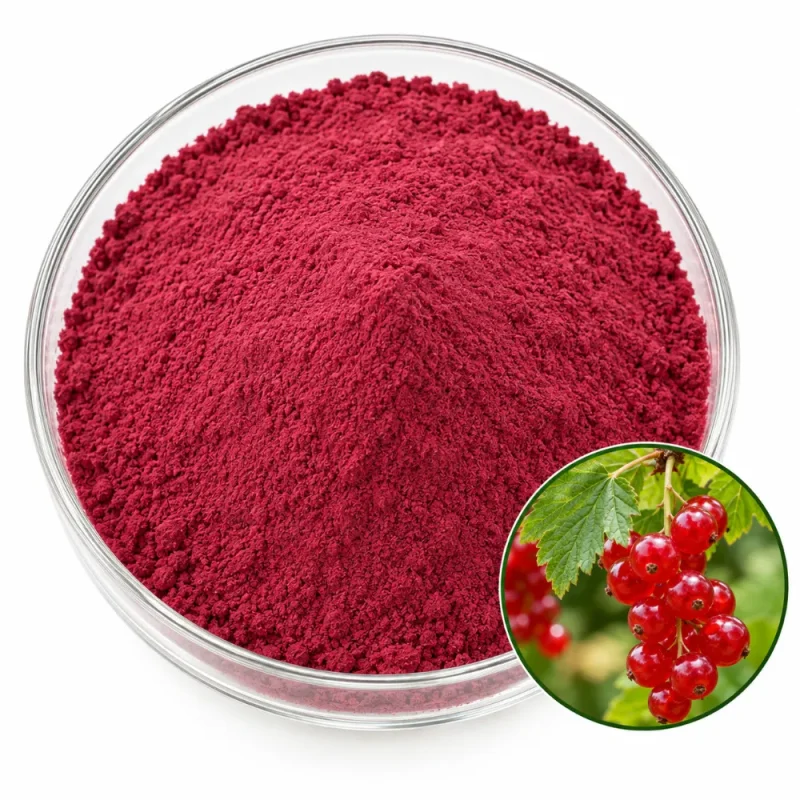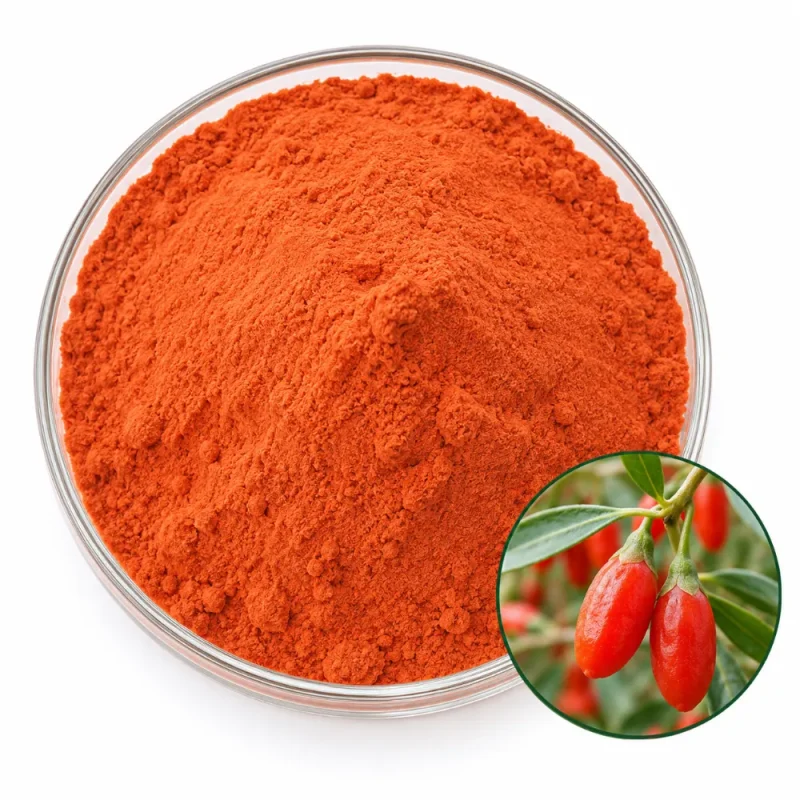
Goji Berry Powder

Goji berry powder is spray-dried from the juice of Lycium barbarum fruit, the Chinese wolfberry known as gouqi, on a maltodextrin carrier. It is a red, water-soluble powder with a sweet, faintly tart and herbal taste. Leaves, root bark and seeds of the shrub are separate materials and are not used.

The red-orange berry color comes largely from carotenoids, which are fat-soluble, so a juice powder behaves differently from a whole-fruit powder in water. The solution carries a warm red-orange tint and a slight haze, not the clear ruby of an anthocyanin juice.

Goji Berry Juice Powder Processing

The species is Lycium barbarum L., the Ningxia wolfberry of the nightshade family (Solanaceae). A second species, Lycium chinense, produces berries that are also sold as goji, and the black wolfberry Lycium ruthenicum gives a dark purple fruit with its own pigments. The two red species are often traded under one name, so identity statements matter. The part used here is the ripe berry only; leaf and root bark are different ingredients.

The raw material is goji berry juice concentrate prepared from the ripe berries. Blended with maltodextrin, the concentrate is sprayed into a hot-air chamber, where the water flashes off and the dissolved solids set as a fine, uniform powder. The carrier is the reason the powder dissolves and flows, and it also dilutes the pigment and sweetens the taste compared with the pressed juice.

Whole dried goji carries its skin and its carotenoids in a solid matrix. Spray-drying the juice leaves most of the insoluble skin material behind, so this powder is lighter in fiber and more uniform in color than ground dried berries.

Lycium berries ripen over several weeks and are picked repeatedly because the soft fruit bruises easily. Ripe fruit gives the sweetness and color that the concentrate needs, and early pickings are paler and sourer, so ripeness at pressing is one of the factors that shape the flavor of the finished powder.
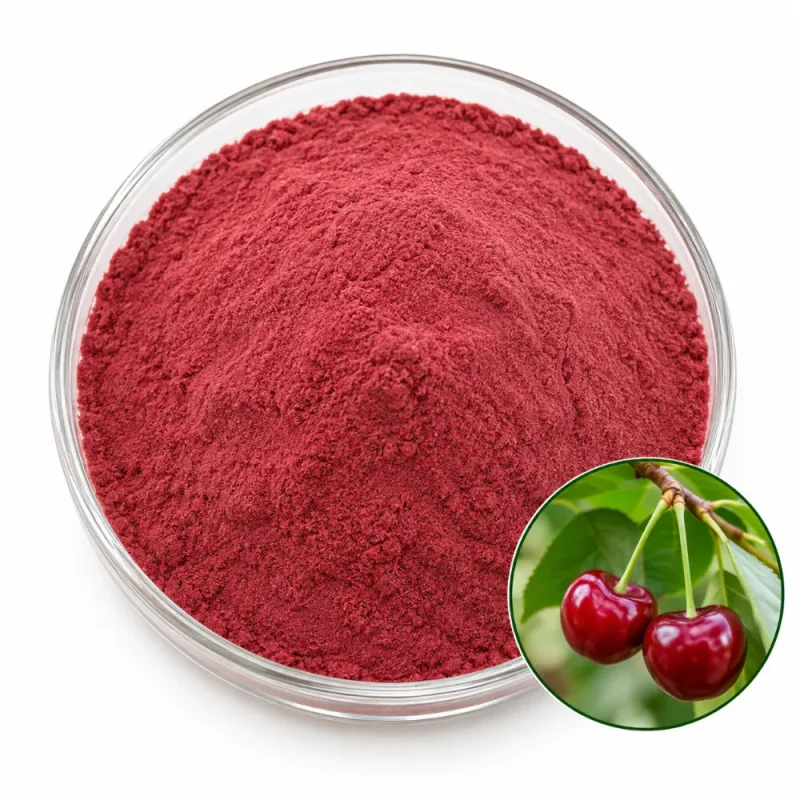
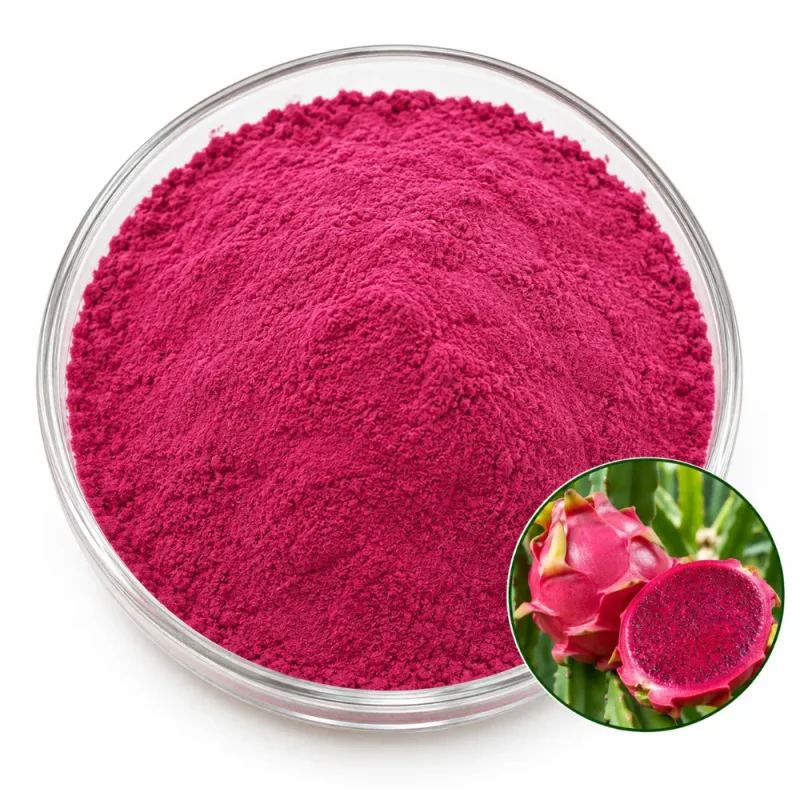
Goji Berry Flavor, Color & Forms

The powder is red with a warm orange cast. The sweetness is round, with a faint tartness and a herbal, slightly molasses-like background that is characteristic of dried goji. In water it gives a clear to lightly hazy red-orange liquid. The haze comes from the carotenoid fraction, mainly zeaxanthin esters, which are dispersed but not dissolved.

Other characteristic constituents are polysaccharides in the form of glycopeptides, the amino acid derivative betaine, and sugars. No figure is given for any of them.

A polysaccharide figure belongs to a separate product, because a juice powder carries maltodextrin and sugars that distort any total-carbohydrate result.

FormWhat It IsChoose It When
Goji Berry Juice PowderSpray-dried juice on a maltodextrin carrierA soluble red-orange color and sweet taste are wanted
Freeze-Dried Goji Berry PowderWhole berries dried under vacuumSkin, pulp and carotenoid solids matter
Goji Berry Extract PowderRatio extract of the berriesA concentrated extract is specified
Lycium barbarum Polysaccharide PowderPolysaccharide-defined extractThe specification states a polysaccharide content

Typical Specifications

Specification ItemProduct Information
Latin NameLycium barbarum
Plant PartFruit & Berry
ProcessingSpray-Dried Juice
Common NameGoji berry
Raw MaterialGoji berry juice concentrate
Ingredient TypeJuice Powder
CarrierMaltodextrin
AppearanceRed powder
FlavorSweet, mildly tart, herbal
Solubility / DispersibilityWater Soluble
Quality Parameters
Moisture (LOD)≤5.0%
Heavy MetalsLead ≤2 ppm · Arsenic ≤1 ppm · Cadmium ≤1 ppm · Mercury ≤0.1 ppm
MicrobiologyTPC ≤10,000 cfu/g · Yeast & Mold ≤1,000 cfu/g · E. coli Negative · Salmonella Negative/25 g
Shelf Life24 months in unopened original packaging, cool and dry storage

Application Areas

Ready-to-Mix Drink Powders

Drink powders use goji berry powder for a warm red-orange color and rounded sweetness that blends with apple, citrus and jujube. It dissolves in cold or warm water and tolerates the heat of instant-tea blends, though extended boiling dulls the carotenoid shade.

Granola and Cereal Bars

Bar and cluster binders can include goji berry powder to add berry flavor and color without the chewy lumps of dried fruit. The powder mixes into syrup binders without visible particles, and its natural sugars contribute to browning, so baking time should be checked.

Herbal Tea and Instant Infusions

Traditional herbal blends combine goji with chrysanthemum, red date and licorice. The juice powder dissolves instantly in a cup, which is why it appears in instant sticks where steeping whole berries would be impractical. Blenders avoid long boiling, since the carotenoid color softens under sustained heat.

Yogurt and Dairy Bases

Dry fruit preps for yogurt and milk drinks take goji berry powder for orange-red color and a mild berry note. The carotenoids tolerate the pH of cultured dairy better than anthocyanin pigments, and the color stays warm rather than turning blue-grey.

Steamed Buns and Pastry Doughs

Bakers working with Chinese-style buns and soft breads add goji berry powder to the flour premix for a gently colored crumb. It does not carry the structure of whole berries, so it adds flavor and tint without the texture of pieces.

Moisture Pickup & Stability

A spray-dried juice powder on maltodextrin is a sugar glass. Goji berry powder is sweet and low in acid, so it cakes less sharply than a citrus powder, but it still takes up water quickly. Weigh it in a dry room, keep the liner tightly closed, and expect a firm cake in a drum left open overnight.

The carotenoid color responds to oxygen and light. Over months, exposure to air and bright light bleaches the red-orange, and warm storage speeds the loss. Opaque, sealed packaging and cool storage keep the shade closer to the received color. The hydrophobic pigments cling to surfaces, so a solution can show a faint ring at the container wall.

Sugars and amino compounds in the juice solids brown with heat, which darkens the powder and softens the fruit note. A hot spray-dry stage or hot storage will accelerate this. Packaging matters more than usual for a pigment-bearing powder. Clear liner film lets light through, so transparent sachets lose red-orange intensity faster than foil-laminated ones, and a drum opened often in a bright room shows a faded surface layer that signals stock rotation.

Packaging & Commercial Supply

Essencefield supports product evaluation, formulation trials, commercial orders, and ongoing ingredient supply. Packaging, storage, and shipping arrangements are determined by product characteristics, order quantity, stability requirements, and destination-market needs.

Supply ItemGeneral Information
SampleAvailable upon request for formulation, testing, and supplier evaluation
Order Quantities100 g · 1 kg · 5 kg · 25 kg · 100 kg · 500 kg · Bulk
Sample Lead TimeTypically 5–7 days after sample confirmation
Production Lead TimeTypically 15–30 days after order and specification confirmation
PackagingSuitable protective inner packaging with bags, cartons, drums, or other appropriate outer packaging
StorageStore in tightly sealed, suitable protective packaging in a cool, dry environment. Protect from moisture, heat, and direct sunlight. Specific storage conditions follow the approved product specification.
DocumentationCOA · Product Specification · TDS · SDS · Applicable declarations (as applicable)

Final order quantities, lead times, packaging, documentation, and shipping arrangements are confirmed according to the selected product and commercial requirements.

Request Ingredient Specifications & Quote

Share your target specification, application, quantity, and documentation needs. We’ll help confirm suitable options, samples, and commercial supply details.