Hawthorn Powder

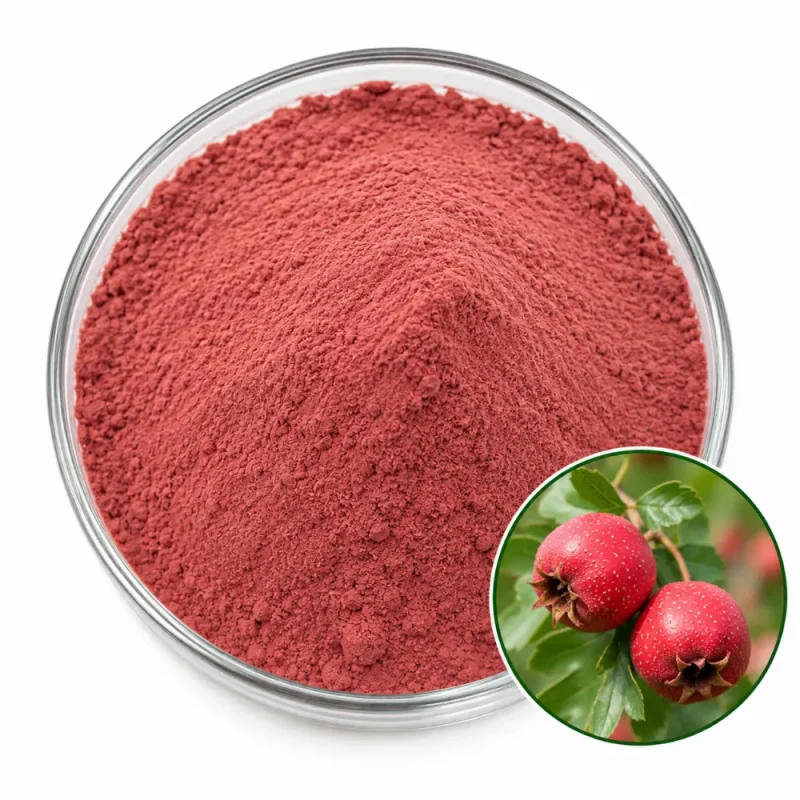
Spray-drying the juice of Crataegus pinnatifida fruit, the Chinese hawthorn or shanzha, on a maltodextrin carrier gives hawthorn powder. It is a light brown, water-soluble powder with a pronounced sour, fruity taste. Leaves and flowers of hawthorn are separate materials and are not used here.

Chinese hawthorn bears small, bright red, apple-like fruit that is very sour. That acid character carries into the powder and sets the way it is used, from sour snack seasonings to drink bases. Maltodextrin is the only carrier, and the powder dissolves in water without cooking.

Hawthorn Juice Powder Processing

The species is Crataegus pinnatifida Bunge, the Chinese or mountain hawthorn of the rose family (Rosaceae), native to northern China and neighboring regions. It differs from the European hawthorns, Crataegus monogyna and Crataegus laevigata, whose pharmacopoeial material is leaf and flower, not fruit. The Chinese species is the traditional source of shanzha fruit, which is eaten as a food across northern China.

The raw material is hawthorn juice concentrate pressed from the fruit. The fruit contains a high share of pectin and fruit acids, so the juice is thick and tart. Maltodextrin is added to the concentrate, and the mixture is atomized in a spray dryer that flashes off the water and leaves fine, soluble particles. The carrier makes the powder soluble and free-flowing, and it also softens the sourness slightly.

The red of the fresh fruit does not carry through. Heat during concentration and drying, and browning of the sugars and phenolics, move the color from red to a light brown, which is the master color for this powder. The shade is a feature of the process, not a sign of a different species.

Hawthorn ripens in autumn and keeps well after picking, which is part of the reason it became a winter staple food in northern China. Fruit is chosen for firm flesh and deep red skin, and the juice is thick because the pulp is dense. Sourness, not sweetness, is the character that buyers expect.
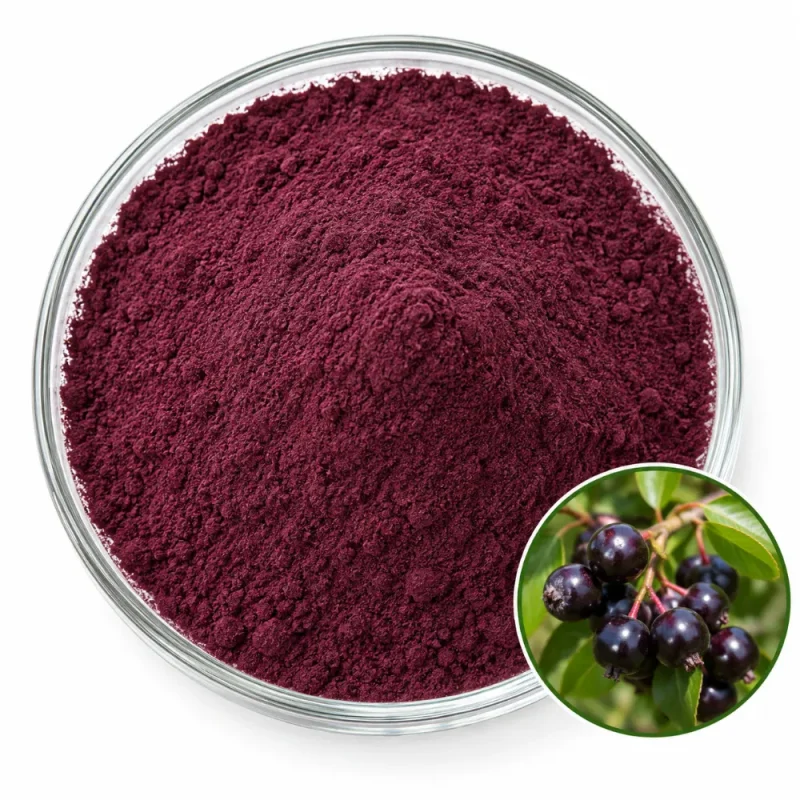
Hawthorn Flavor, Color & Forms

The powder is light brown with a dried-fruit aroma, somewhere between apple, plum and dried apricot. The taste is sharply sour, with a fruity sweetness behind it and a mild astringency. In water it gives a clear to hazy amber to orange-brown liquid. Fruit acids, mainly citric and malic, produce the sourness.

Characteristic constituents of the fruit are organic acids, procyanidins and other flavonoids, triterpenic acids, pectin and sugars; the powder is described without figures. The flavonoids that make hawthorn leaf materials distinct, including the vitexin family, belong mainly to the leaf and are not claimed for this fruit powder.

FormWhat It IsChoose It When
Hawthorn Juice PowderSpray-dried juice on maltodextrinA soluble, sour hawthorn base is wanted
Freeze-Dried Hawthorn PowderWhole fruit dried under vacuumPulp solids and fruit fiber matter
Hawthorn Fruit Extract PowderRatio extract of the fruitA concentrated extract is specified
Hawthorn Extract 2–20% FlavonoidsStandardized extract with a defined flavonoid levelA flavonoid figure is needed in the specification

Typical Specifications

Specification ItemProduct Information
Latin NameCrataegus pinnatifida
Plant PartFruit & Berry
ProcessingSpray-Dried Juice
Common NameHawthorn
Raw MaterialHawthorn juice concentrate
Ingredient TypeJuice Powder
CarrierMaltodextrin
AppearanceLight Brown powder
FlavorSour, fruity, mildly astringent
Solubility / DispersibilityWater Soluble
Quality Parameters
Moisture (LOD)≤5.0%
Heavy MetalsLead ≤2 ppm · Arsenic ≤1 ppm · Cadmium ≤1 ppm · Mercury ≤0.1 ppm
MicrobiologyTPC ≤10,000 cfu/g · Yeast & Mold ≤1,000 cfu/g · E. coli Negative · Salmonella Negative/25 g
Shelf Life24 months in unopened original packaging, cool and dry storage

Application Areas

Sour Snack Seasoning Powders

Northern Chinese sour snacks such as hawthorn flakes use a dry fruit-and-sugar base, and hawthorn powder reproduces that tart flavor in seasoning dusts for candy and fruit leather. It blends with sugar and acid, and moisture control matters because the acid-sugar mix is hygroscopic.

Sweet-Sour Drink Mixes

Sweet-sour drinks in the style of suanmeitang, the plum-and-hawthorn cooler, use hawthorn powder with sweeteners and dried plum notes. The powder dissolves in cold water to an amber drink, and the high acidity means sugar levels in the mix should be tuned.

Candied Fruit Style Confectionery

Soft candies and gummies take hawthorn powder to evoke the taste of tanghulu, the sugar-coated hawthorn skewer. The pectin in the fruit solids supports the gel, and the acid sets a bright flavor that is hard to reach with citric acid alone.

Fruit Filling Premixes

Dry fruit-filling mixes for pastries and steamed buns use hawthorn powder as a tart base that cuts sweetness. It is added to the cooled filling to protect the fruit aroma, and its brown tone suits fillings that are meant to look cooked.

Sauce and Glaze Bases

Sweet-sour sauces use hawthorn powder to supply fruit acid and color without adding the sharp smell of vinegar. It dissolves in warm water, thickens slightly because of pectin, and works well with ginger, soy and rice vinegar blends in dry sauce premixes for meat and fried dishes.

Moisture Pickup & Stability

Hawthorn powder is both acidic and sugar-bearing, a combination that makes spray-dried solids especially moisture-active. Left open in damp air, it softens, forms sticky lumps and then bonds to the drum wall. Weigh it in a dry room and close the liner immediately after each draw.

Because the fruit is high in pectin, which gives hawthorn jellies and candies their body, the powder thickens liquids at higher concentration, and it can form a gel with sugar in acid conditions. This is a feature in fillings and sauces but a problem in clear drinks, so trial the viscosity at the intended level before scale-up.

Color is the last point. The light brown shade deepens gradually under warm storage as sugars and phenolics continue to brown, and light exposure adds a slight bleaching. Keep unopened drums cool and use opened ones promptly. Because the acid and sugar attract water together, a desiccant pouch in the carton is no substitute for a well-sealed liner.

Packaging & Commercial Supply

Essencefield supports product evaluation, formulation trials, commercial orders, and ongoing ingredient supply. Packaging, storage, and shipping arrangements are determined by product characteristics, order quantity, stability requirements, and destination-market needs.

Supply ItemGeneral Information
SampleAvailable upon request for formulation, testing, and supplier evaluation
Order Quantities100 g · 1 kg · 5 kg · 25 kg · 100 kg · 500 kg · Bulk
Sample Lead TimeTypically 5–7 days after sample confirmation
Production Lead TimeTypically 15–30 days after order and specification confirmation
PackagingSuitable protective inner packaging with bags, cartons, drums, or other appropriate outer packaging
StorageStore in tightly sealed, suitable protective packaging in a cool, dry environment. Protect from moisture, heat, and direct sunlight. Specific storage conditions follow the approved product specification.
DocumentationCOA · Product Specification · TDS · SDS · Applicable declarations (as applicable)

Final order quantities, lead times, packaging, documentation, and shipping arrangements are confirmed according to the selected product and commercial requirements.

Request Ingredient Specifications & Quote

Share your target specification, application, quantity, and documentation needs. We’ll help confirm suitable options, samples, and commercial supply details.