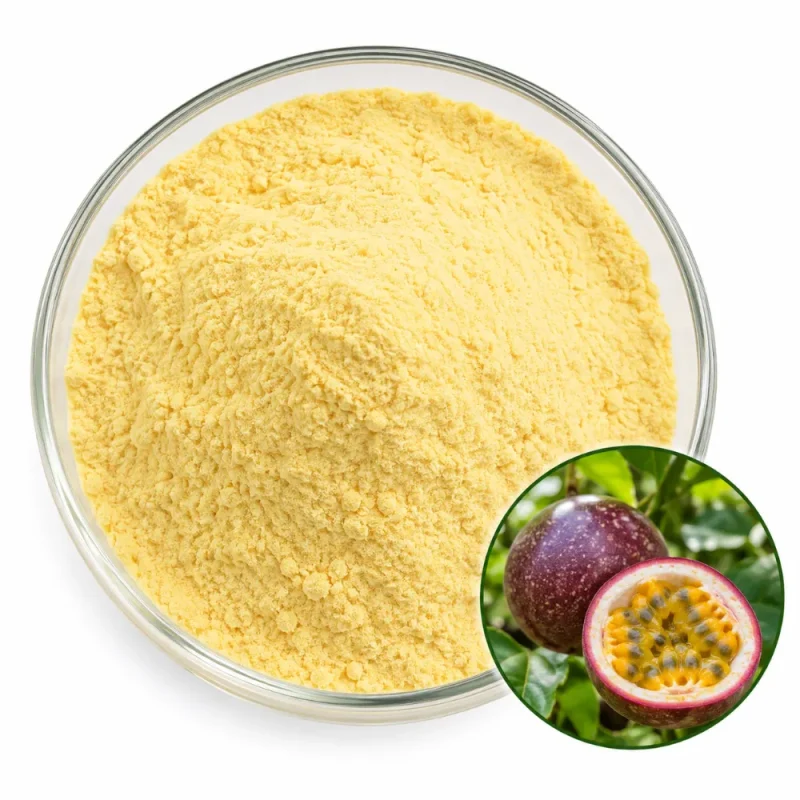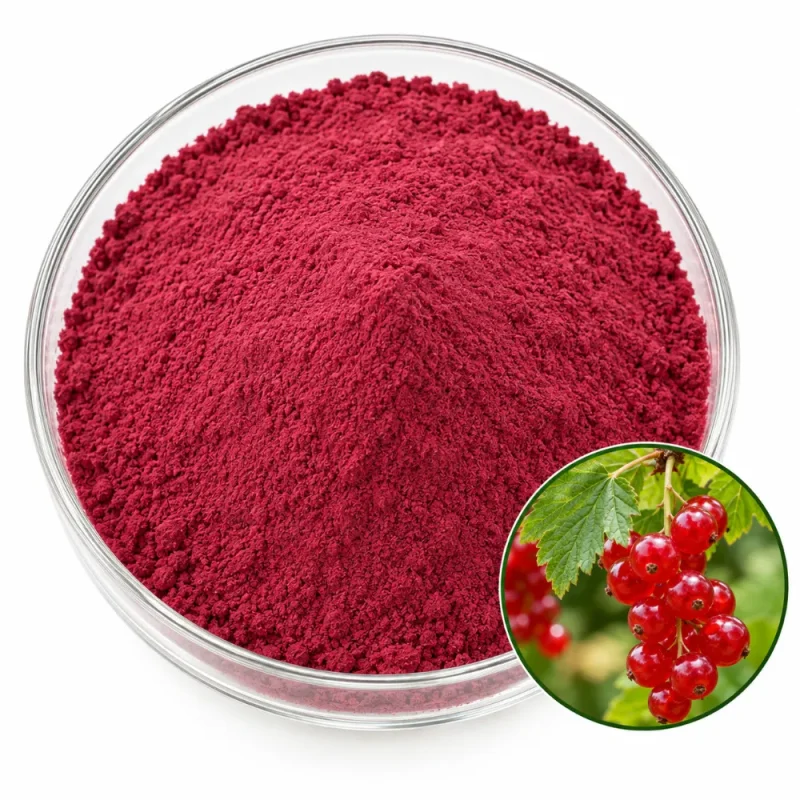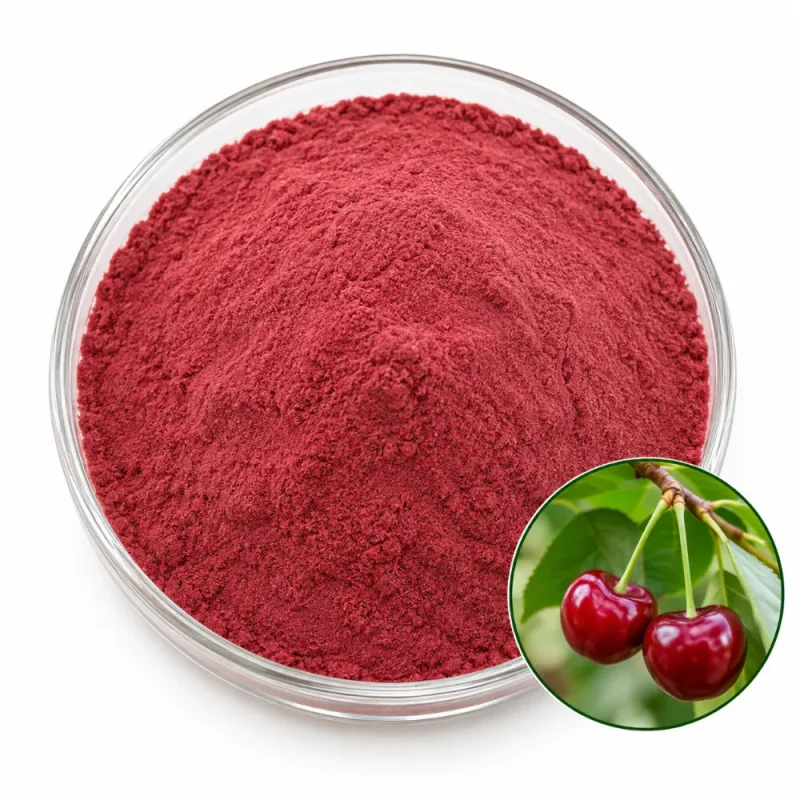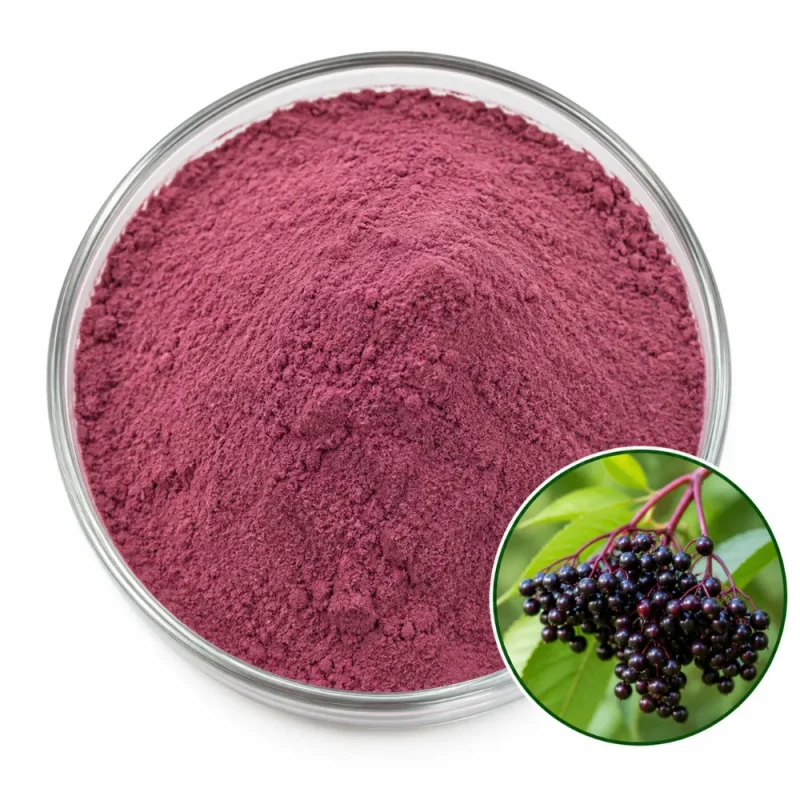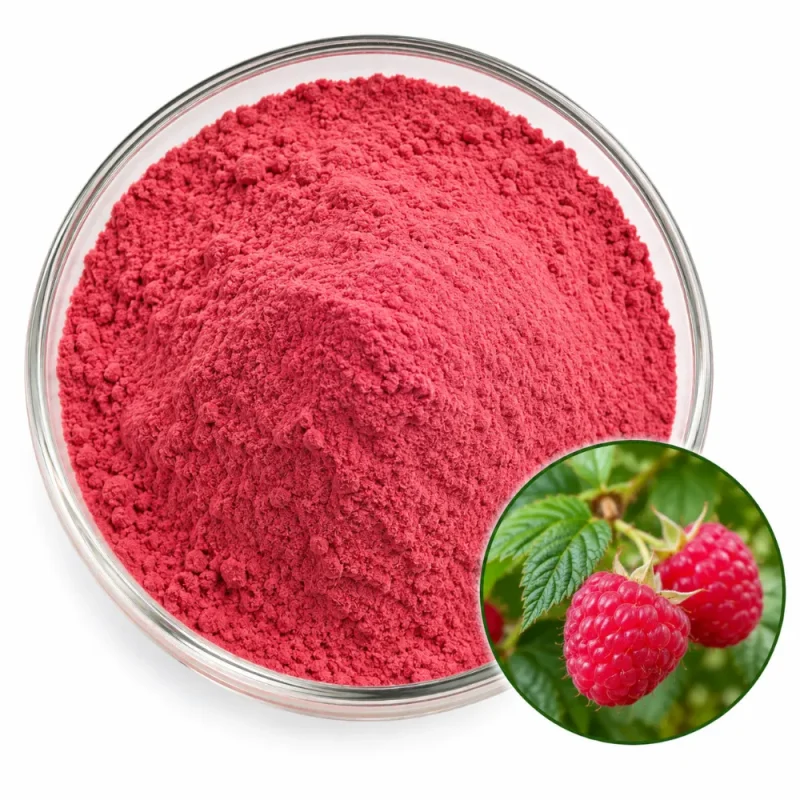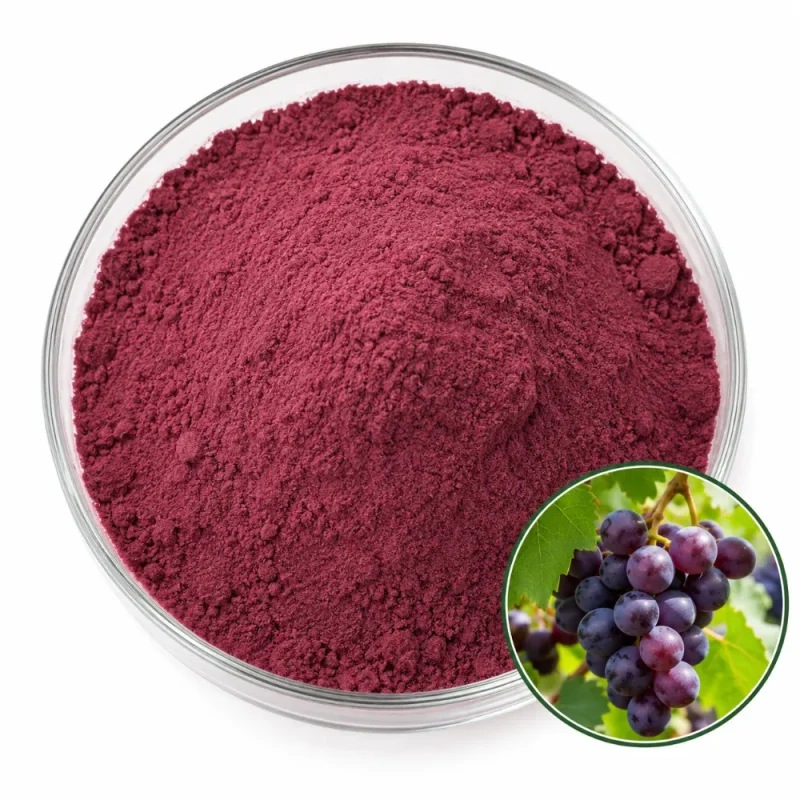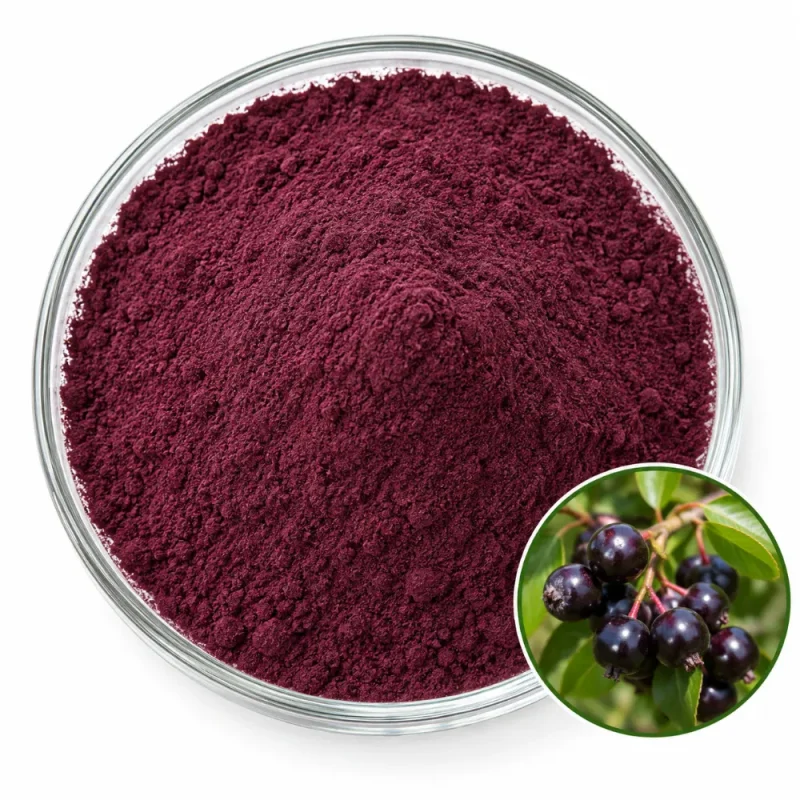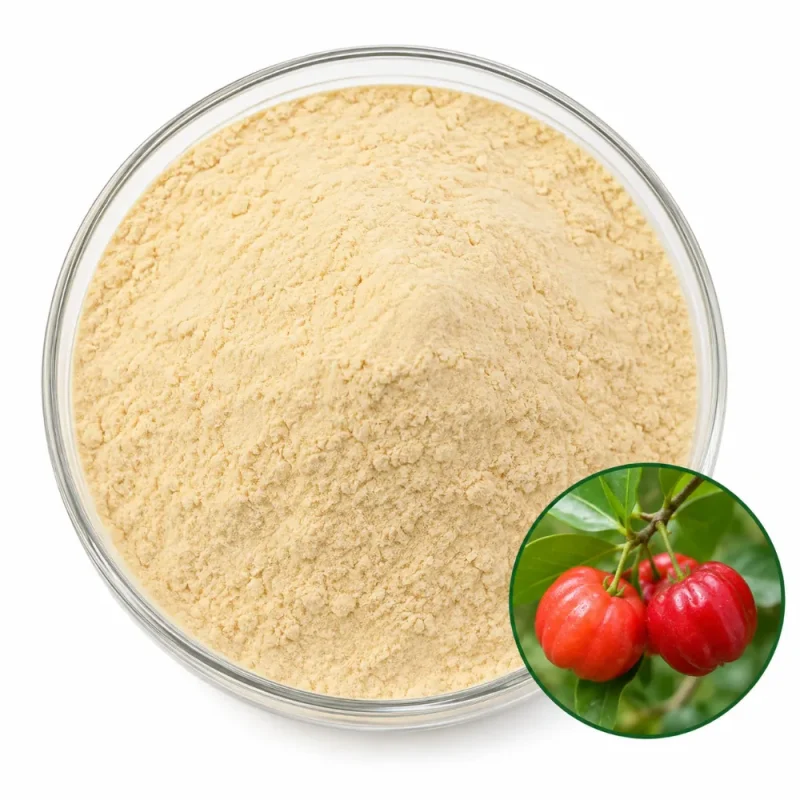
Acerola Cherry Powder

Acerola cherry juice, pressed from the small red fruit of Malpighia emarginata, is concentrated and spray-dried onto a maltodextrin carrier to give this purple-red powder. The raw material is the juice of the whole ripe fruit, so the stone, the leaf and the stem stay out of the material.

Acerola cherry powder dissolves in water and has a bright, sharp, fruity-sour taste with a faint apple-like sweetness. It differs from freeze-dried acerola powder, which keeps the pulp and fiber, and from acerola extract, which is concentrated around a defined marker.

Acerola Juice Powder Processing

The species is Malpighia emarginata DC., family Malpighiaceae, known as acerola, Barbados cherry or West Indian cherry. It has no botanical link to the true cherries of the genus Prunus, even though the fruit looks similar. The older names Malpighia glabra and Malpighia punicifolia are synonyms that still appear on labels for the same fruit, and spelling variants of the Latin name are common in trade.

The raw material is acerola juice concentrate. The ripe fruit is pressed, the juice is concentrated and mixed with maltodextrin, and the mixture is spray-dried to a fine powder. The carrier makes the powder free-flowing and soluble, and it softens the very sharp taste of the juice, although the sour, fruity character of the fruit remains clear.

Ripeness shapes the juice. Acerola is known for ascorbic acid, which is highest in green and half-ripe fruit and declines as the fruit reddens, while the ripe fruit gains sugar, deeper color and a milder acidity. The juice used for the powder therefore reflects the harvest stage, and the powder is defined by its fruit and process, not by a fixed ascorbic acid level.
Acerola Flavor, Color & Forms

Acerola cherry powder is purple-red to dark pink, and it dissolves in water into a clear to slightly hazy red liquid. The color comes from anthocyanins and carotenoids in the skin and pulp, and it shifts toward orange in acidic bases and toward brown with heat. The taste is tart and fruity, closer to a sharp berry than to a sweet cherry.

Acerola is a fruit known for ascorbic acid, anthocyanins and carotenoids, named here as traits of the fruit and not as stated levels for this powder. Ascorbic acid is sensitive to heat, light, oxygen and metal ions, so the powder is handled away from copper and iron, and its sour character is kept in mind when pectin or gelatin systems are designed.

FormWhat It IsChoose It When
Acerola Juice PowderSpray-dried acerola juice on a maltodextrin carrierA soluble, tart fruit powder for drinks
Freeze-Dried Acerola PowderFreeze-dried whole fruit that keeps pulp and fiberFruit texture and fiber are wanted
Acerola Cherry Extract PowderWater-extracted acerola concentrate without a stated markerA solid extract format instead of a juice powder
Acerola Cherry Extract 17–25% Natural Vitamin CAcerola extract standardized to ascorbic acidA defined ascorbic acid content is the requirement

The juice powder is the form for soluble, acidic products. The freeze-dried powder is the form when pulp, fiber and a darker, fuller fruit look are wanted, and the extracts serve formulas where dose and marker content matter more than fruit character.

Typical Specifications

Specification ItemProduct Information
Latin NameMalpighia emarginata
Plant PartFruit & Berry
ProcessingSpray-Dried Juice
Common NameAcerola, acerola cherry, Barbados cherry
Raw MaterialAcerola juice concentrate
Ingredient TypeJuice Powder
CarrierMaltodextrin
AppearancePurple Red powder
FlavorTart, fruity, faintly apple-like
Solubility / DispersibilityWater Soluble
Quality Parameters
Moisture (LOD)≤5.0%
Heavy MetalsLead ≤2 ppm · Arsenic ≤1 ppm · Cadmium ≤1 ppm · Mercury ≤0.1 ppm
MicrobiologyTPC ≤10,000 cfu/g · Yeast & Mold ≤1,000 cfu/g · E. coli Negative · Salmonella Negative/25 g
Shelf Life24 months in unopened original packaging, cool and dry storage

Application Areas

Instant fruit drink powders

Acerola cherry powder dissolves quickly in cold and warm water, which makes it a practical base for instant drink mixes and stick packs. Its sharp taste is balanced with sweetener or milder fruit powders, and the red color gives the drink a fresh, vivid look.

Tart gummies and fruit chews

Pectin gummies and chews take the powder as an acidic, colored fruit component. The low pH of the fruit solids weakens some gels, so pectin type and acid levels are adjusted in the trial batch, and the powder is added late to keep heat exposure short.

Yogurt and dairy-style bases

Dairy and plant-based yogurt bases use the powder for a bright fruit note and a pink tint. The acid thickens milk proteins, so the powder is added with mixing and at a modest level, and the color is checked after storage.

Fruit fillings and glazes

Bakery fillings and glazes accept the powder as a dry sour component. It combines with apple or banana solids that soften the acidity, and heat in the oven shifts the red toward brown, so the filling is tested after baking.

Smoothie and shake bases

Smoothie bases combine the powder with banana, mango or pineapple powders for a tropical profile. The acid balances sweet fruit solids, and the powder is stirred in before the milk or juice, so that it dissolves without lumps.

Moisture Pickup & Stability

Juice powders on a maltodextrin carrier take up moisture rapidly, and acerola powder is rich in fruit acids and sugars that pull water from the air. In an open pack the particles stick together, a crust forms and the whole content can set to a block in humid rooms. Sealed barrier packaging, dry weighing areas and quick resealing keep the powder free-flowing.

The color is the quickest sign of damage. Anthocyanins and carotenoids fade under light and heat, and a brownish shift in the powder points to humidity, age or warm storage. Copper and iron accelerate the loss of both color and ascorbic acid, so stainless steel equipment and opaque packs are used.

Opened containers are resealed at once and stored cool and dry. A premix that contains acerola powder is kept away from alkaline ingredients, since carbonate and other alkaline minerals neutralize the acid, release gas and shift the red toward gray-purple.

Packaging & Commercial Supply

Essencefield supports product evaluation, formulation trials, commercial orders, and ongoing ingredient supply. Packaging, storage, and shipping arrangements are determined by product characteristics, order quantity, stability requirements, and destination-market needs.

Supply ItemGeneral Information
SampleAvailable upon request for formulation, testing, and supplier evaluation
Order Quantities100 g · 1 kg · 5 kg · 25 kg · 100 kg · 500 kg · Bulk
Sample Lead TimeTypically 5–7 days after sample confirmation
Production Lead TimeTypically 15–30 days after order and specification confirmation
PackagingSuitable protective inner packaging with bags, cartons, drums, or other appropriate outer packaging
StorageStore in tightly sealed, suitable protective packaging in a cool, dry environment. Protect from moisture, heat, and direct sunlight. Specific storage conditions follow the approved product specification.
DocumentationCOA · Product Specification · TDS · SDS · Applicable declarations (as applicable)

Final order quantities, lead times, packaging, documentation, and shipping arrangements are confirmed according to the selected product and commercial requirements.

Request Ingredient Specifications & Quote

Share your target specification, application, quantity, and documentation needs. We’ll help confirm suitable options, samples, and commercial supply details.