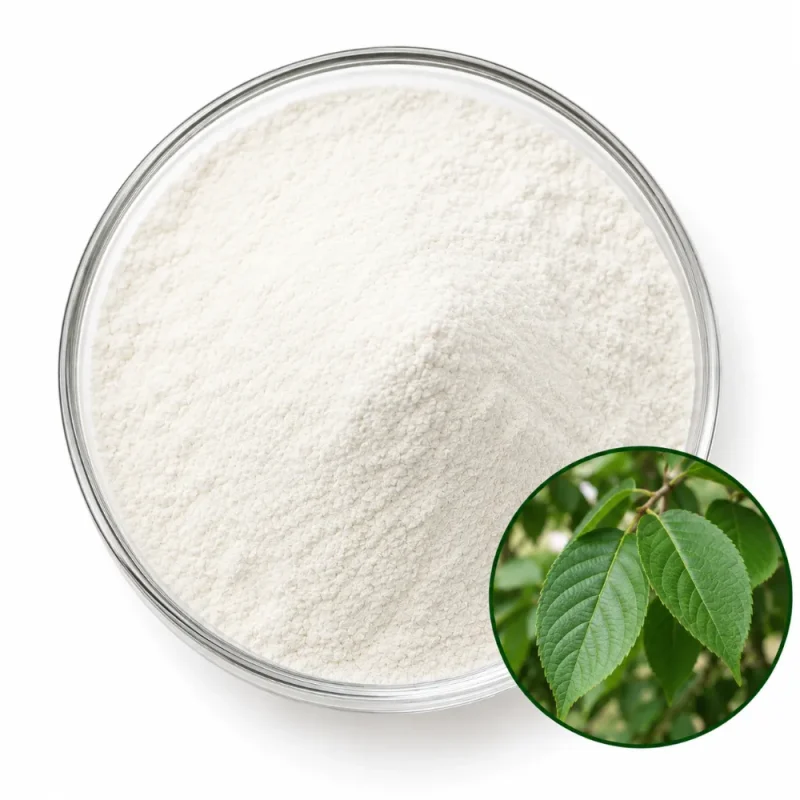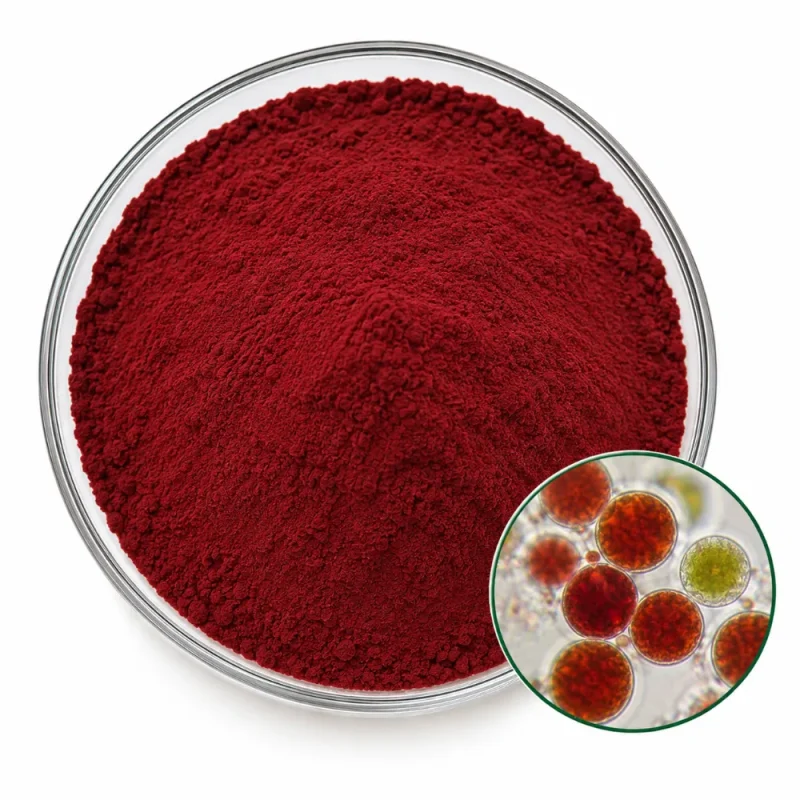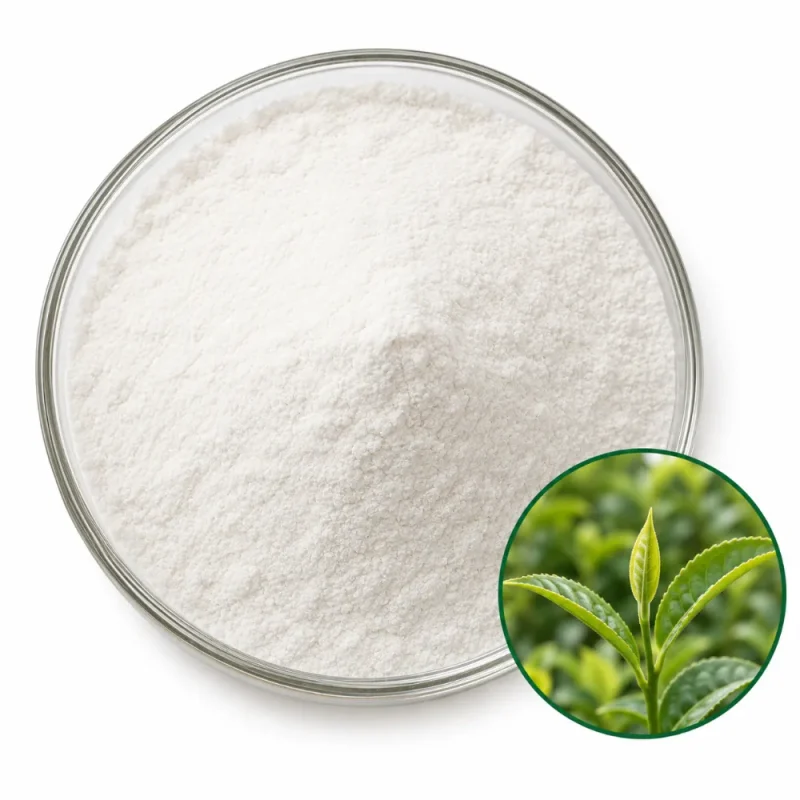
Cardamonin 98%

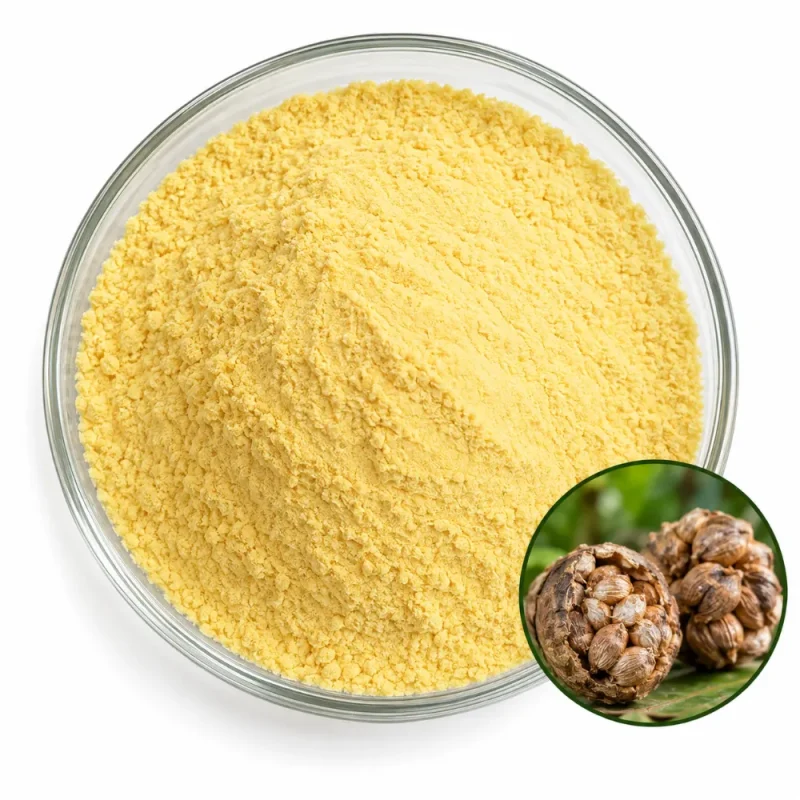
A yellow chalcone from the seed of Alpinia katsumadai, cardamonin owes its color to the conjugated enone that links its two aromatic rings. The compound is isolated by ethanol extraction and purification and supplied as a yellow powder that is insoluble in water.

The Primary Grade is 98% cardamonin by HPLC, in Food / Dietary Supplement Grade. The figure describes this single chalcone, not total flavonoids, and the identity values in the table apply to cardamonin only. The closed-ring flavanone alpinetin from the same seed is a separate product.

Cardamonin Chemical Identity

Cardamonin (2′,4′-dihydroxy-6′-methoxychalcone, C16H14O4, molecular weight 270.28) is a chalcone: two aromatic rings joined by a three-carbon bridge that carries a ketone and a trans double bond. The A ring bears two hydroxyl groups and a methoxy group, and the B ring is a plain phenyl. The conjugated enone is the structural feature that absorbs visible light and gives the powder a yellow color.

The raw material is the seed of Alpinia katsumadai Hayata (Zingiberaceae). Cardamonin was named for cardamom, and the compound is found in other plants of the ginger family, but the source of this product is the seed of Alpinia, and other Alpinia species such as A. oxyphylla are different raw materials.

Under the right conditions the chalcone can close into the flavanone alpinetin, which has the same formula C16H14O4, and cardamonin is also listed under the synonym alpinetin chalcone. Buyers comparing neighbors can look at Alpinetin 98%, Pinocembrin 98% and Alpinia katsumadai extract powder.

Searches for the compound often return mixed labels. Cardamonin appears alongside cardamom oil, which is an unrelated volatile mixture from a different part of the ginger family, and it is also listed as alpinetin chalcone. A specification that quotes the CAS number 19309-14-9 and the HPLC grade identifies the pure chalcone and excludes both.

Typical Specifications

Specification ItemProduct Information
Natural SourceAlpinia katsumadai seed
Plant PartSeed & Grain
ProcessingEthanol Extraction & Purification
Compound ClassFlavonoids, Polyphenols
Chemical Name (IUPAC)(E)-1-(2,4-dihydroxy-6-methoxyphenyl)-3-phenylprop-2-en-1-one
CAS Number19309-14-9
Molecular FormulaC16H14O4
Molecular Weight270.28 g/mol
PubChem CID641785
InChIKeyNYSZJNUIVUBQMM-BQYQJAHWSA-N
Purity98% (HPLC)
GradeFood / Dietary Supplement Grade
AppearanceYellow powder
Solubility / DispersibilityInsoluble in Water
Quality Parameters
Moisture (LOD)≤5.0%
Total Ash≤5.0%
Heavy MetalsLead ≤2 ppm · Arsenic ≤1 ppm · Cadmium ≤1 ppm · Mercury ≤0.1 ppm
MicrobiologyTPC ≤1,000 cfu/g · Yeast & Mold ≤100 cfu/g · E. coli Negative · Salmonella Negative/25 g
Shelf Life24 months in unopened original packaging, cool and dry storage

Cardamonin Purity & Related Substances

Cardamonin 98% is a single-compound grade measured by HPLC. In the trace, cardamonin accounts for the stated share of detected peak area, while water, ash and non-absorbing residues sit outside the figure. Chalcones absorb strongly in the visible and near-UV range, which makes detection easy, and the wavelength used should be stated when two certificates are compared.

The nearest related substance is alpinetin, the cyclized isomer with identical mass, so the two must be separated by retention time and told apart by their spectra, since the chalcone absorbs at a longer wavelength. Pinocembrin, another seed flavanone, and diarylheptanoids are further companions. Light and heat convert the trans double bond partly into the cis form, which appears as a neighboring peak, so a lot handled in daylight can show an apparent drop in purity.

The compound is plant-derived and is obtained from the seed by ethanol extraction and purification. A total flavonoid value from a seed extract is a different measurement and cannot stand in for this single-compound purity.

Release criteria combine a clean chromatogram with a diode-array spectrum. The main peak should absorb at the chalcone wavelength, which is longer than the flavanone, and the cis form should stay at or below a defined trace level. Water content shows storage quality, and the color of the powder should be a uniform yellow.

Cardamonin Solubility & Delivery

Cardamonin is insoluble in water. The enone, one methoxy group and two phenolic hydroxyl groups give a molecule that dissolves in ethanol, methanol, acetone and other organic solvents, with limited solubility in oils. The two hydroxyl groups engage in hydrogen bonding, so the powder dissolves slowly even in a good solvent.

Delivery approaches in principle include micronized powders, oil-phase dispersions, co-solvent premixes, cyclodextrin or phospholipid complexes and solid dispersions. The enone is a Michael acceptor and can react with thiols and amines, so formulations with free cysteine or reactive amino acids are tested for compatibility. Light drives trans-to-cis conversion, which makes opaque packaging and low-light processing sensible.

The yellow powder stains equipment and containers, and cleaning between products is checked by eye. It is fine and electrostatic, so closed transfer and a dry weighing area keep the dose accurate, and a dilution premix improves uniformity.

Because the chalcone is a colored, light-sensitive compound, processing areas use yellow or low-intensity lighting at the weighing stage, and the powder is moved in amber or opaque containers. Premixes are made on the day of use where practical, and unused premix is stored closed and protected from light.

Application Areas

Hard capsules in opaque shells

Cardamonin is light sensitive and strongly colored, so opaque capsule shells and a premix with a free-flowing excipient give stable, uniform fills. Fill weights are sampled during the run, and the powder stays closed between weighings.

Softgels with lipid carriers

A micronized cardamonin dispersion in oil wets better than a dry fill. The tank is stirred during encapsulation and the fill is sampled for uniformity, while an opaque shell limits the light that reaches the chalcone.

Coated tablets

In tablets the yellow powder is diluted with filler and binder at low inclusion, and a coating hides the tint and limits light and humidity contact. A content uniformity check shows whether the small dose is spread evenly through the batch.

Light-barrier stick packs

Dry mixes stirred into water need a dispersant to keep the insoluble powder suspended, and the stick is packed in foil to protect the chalcone from light. The finished drink takes a yellow tint from the compound itself.

Chalcone and flavanone blends

Cardamonin is combined with alpinetin or pinocembrin in capsules. Each component is assayed separately, and the finished blend is checked for the intended chalcone-to-flavanone ratio, since the two can interconvert slowly. The result is recorded for each lot before release.

Packaging & Commercial Supply

Essencefield supports product evaluation, formulation trials, commercial orders, and ongoing ingredient supply. Packaging, storage, and shipping arrangements are determined by product characteristics, order quantity, stability requirements, and destination-market needs.

Supply ItemGeneral Information
SampleAvailable upon request for formulation, testing, and supplier evaluation
Order Quantities100 g · 1 kg · 5 kg · 25 kg · 100 kg · 500 kg · Bulk
Sample Lead TimeTypically 5–7 days after sample confirmation
Production Lead TimeTypically 15–30 days after order and specification confirmation
PackagingSuitable protective inner packaging with bags, cartons, drums, or other appropriate outer packaging
StorageStore in tightly sealed, suitable protective packaging in a cool, dry environment. Protect from moisture, heat, and direct sunlight. Specific storage conditions follow the approved product specification.
DocumentationCOA · Product Specification · TDS · SDS · Applicable declarations (as applicable)

Final order quantities, lead times, packaging, documentation, and shipping arrangements are confirmed according to the selected product and commercial requirements.

Request Ingredient Specifications & Quote

Share your target specification, application, quantity, and documentation needs. We’ll help confirm suitable options, samples, and commercial supply details.