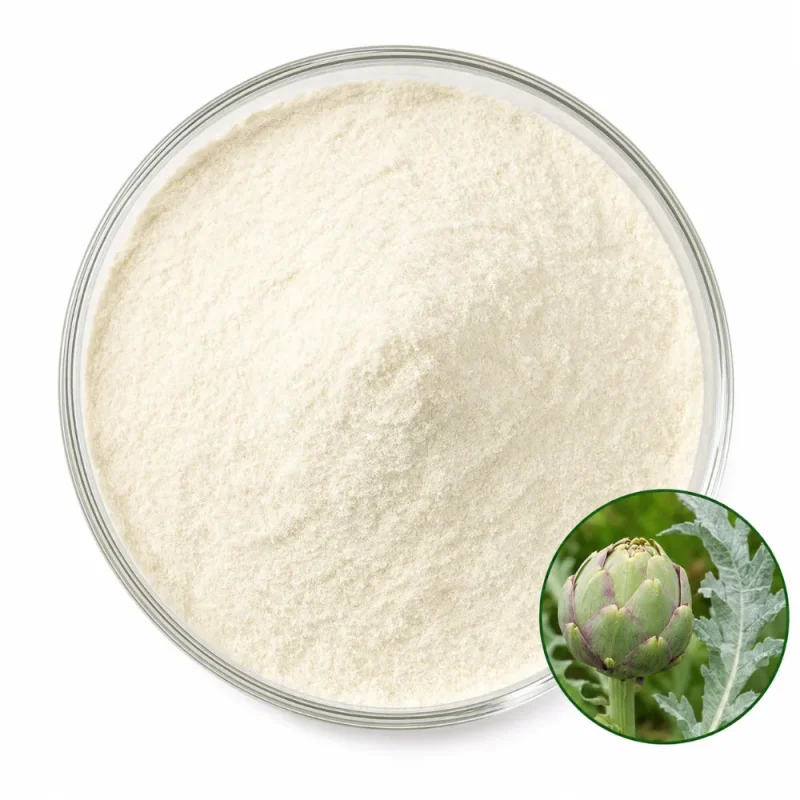
1,5-Dicaffeoylquinic Acid 98%

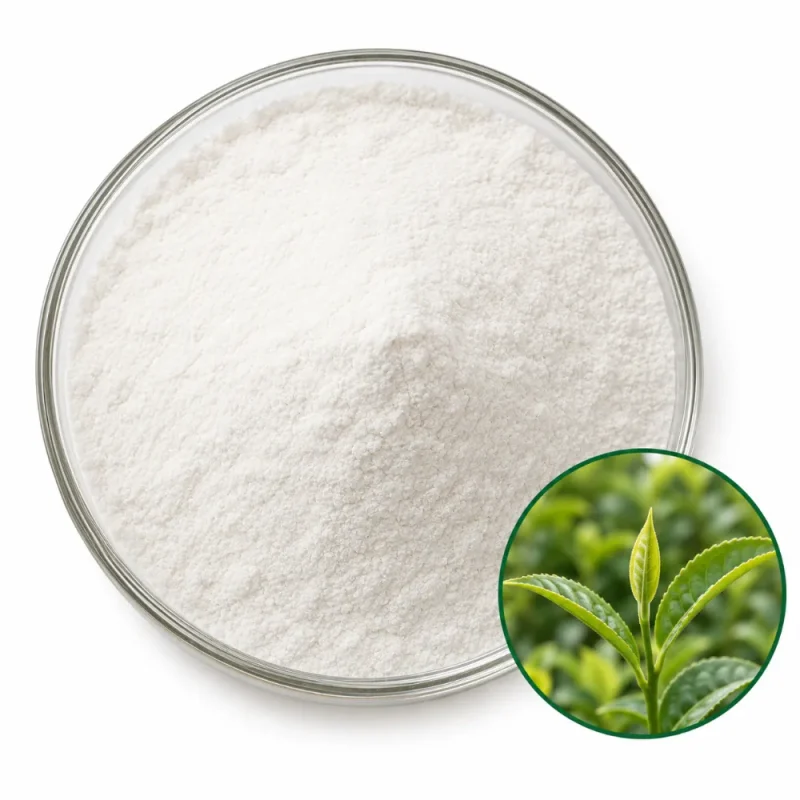
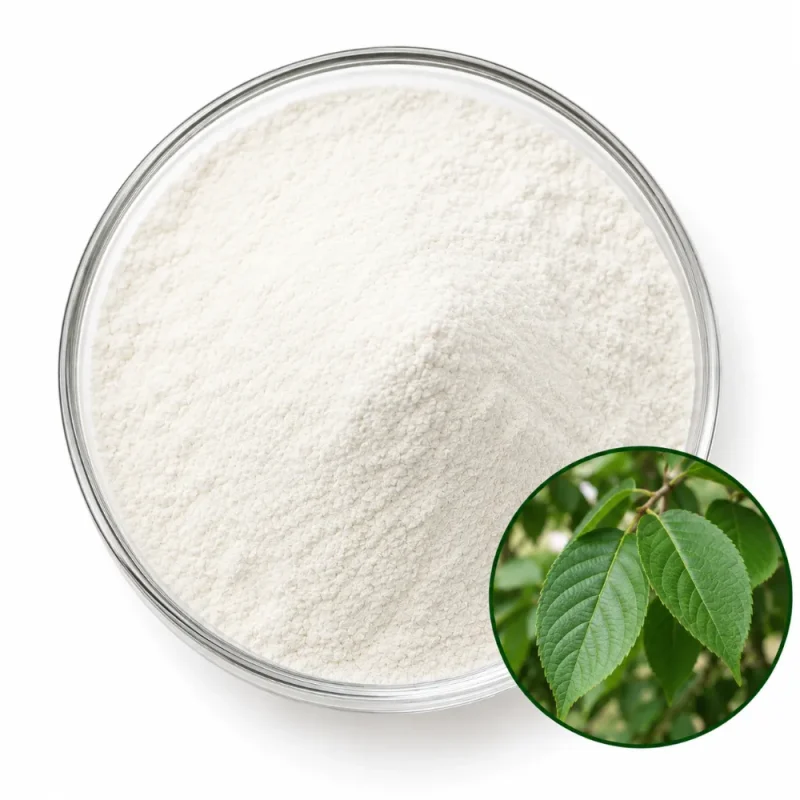
Two caffeic acid groups bound to quinic acid at positions 1 and 5 give 1,5-dicaffeoylquinic acid, and this material is isolated from the leaf of Cynara scolymus, the globe artichoke, by ethanol extraction and purification. It is a water soluble, off-white powder and the positional isomer most often confused with cynarin.

The primary grade is 98% 1,5-dicaffeoylquinic acid by HPLC, in Food / Dietary Supplement Grade. Because five isomers share one formula and one molecular weight, the locants 1,5 are the identity of this product, together with the retention time and the spectra of the main peak.

1,5-Dicaffeoylquinic Acid Chemical Identity

1,5-Dicaffeoylquinic acid has the molecular formula C25H24O12 and the molecular weight 516.4, the same as for every other dicaffeoylquinic acid. The quinic acid core is a cyclohexane carboxylic acid with four hydroxyl groups, and in 1,5-dicaffeoylquinic acid two of them, at positions 1 and 5, are esterified with caffeic acid. The caffeoyl groups sit on opposite sides of the ring, with the hydroxyls at positions 3 and 4 left free between them. That arrangement differs from the 1,3 isomer, where both esters are on the same side of the carboxyl-bearing carbon, and from the 3,4, 3,5 and 4,5 isomers, which leave the C1 hydroxyl untouched.

The natural source is the leaf of Cynara scolymus L. In the leaf, chlorogenic acid is the major caffeoylquinic acid, and the dicaffeoyl esters are smaller members of the group alongside the bitter lactone cynaropicrin. Related artichoke products are Artichoke Extract 0.5–5% Cynarin, the 10:1 Artichoke Extract Powder and the milled Artichoke Leaf Powder. The neighboring isomer of 1,5-dicaffeoylquinic acid is supplied as 1,3-Dicaffeoylquinic Acid 98%. The two are different compounds, even though a few product listings have used the name cynarin for either.

Typical Specifications

Specification ItemProduct Information
Natural SourceCynara scolymus leaf
Plant PartLeaf & Herb
ProcessingEthanol Extraction & Purification
Compound ClassPolyphenols
Molecular FormulaC25H24O12
Molecular Weight516.4
Purity98% (HPLC)
GradeFood / Dietary Supplement Grade
AppearanceOff-White powder
Solubility / DispersibilityWater Soluble
Quality Parameters
Moisture (LOD)≤5.0%
Total Ash≤5.0%
Heavy MetalsLead ≤2 ppm · Arsenic ≤1 ppm · Cadmium ≤1 ppm · Mercury ≤0.1 ppm
MicrobiologyTPC ≤1,000 cfu/g · Yeast & Mold ≤100 cfu/g · E. coli Negative · Salmonella Negative/25 g
Shelf Life24 months in unopened original packaging, cool and dry storage

1,5-Dicaffeoylquinic Acid Purity Grades & Impurities

The 98% figure is an HPLC result that compares the 1,5-dicaffeoylquinic acid peak with the other detected peaks, usually at a wavelength near 325 nm, the region where the caffeoyl chromophore absorbs. It leaves out water, ash and compounds that do not absorb, so the moisture and ash limits in the table are needed beside it. The product is offered at a single grade.

The central analytical task is separating 1,5-dicaffeoylquinic acid from its neighbors. The 1,3, 3,4, 3,5 and 4,5 isomers share the mass, the formula and the spectrum, and they elute within a narrow window, so the result depends on column, gradient and temperature. A report that shows the full isomer pattern is more useful than a bare percentage, because it tells a buyer which of the five compounds is the main peak and which are minor companions. Monocaffeoylquinic acids, led by chlorogenic acid, elute earlier and appear as small peaks.

The related substances also include hydrolysis products. Caffeic acid and quinic acid form when the ester bonds break in warm water, and a lot that was heated or stored damp shows them as growing peaks. In solution, the caffeoyl groups migrate between hydroxyl positions, but the ester at the carboxyl-bearing carbon is comparatively resistant, which is one reason 1,5-dicaffeoylquinic acid is more stable than isomers with esters on the secondary hydroxyls.

Color is the practical signal. A clean lot is off-white, and a tan or brown tone means oxidation of the catechol rings or residual leaf pigment. Moisture and ash are limited separately, and the powder is stored dry and out of light.

1,5-Dicaffeoylquinic Acid Solubility & Delivery

1,5-Dicaffeoylquinic acid dissolves in water, in aqueous ethanol and in methanol, and it is poorly soluble in nonpolar solvents. The free carboxyl and the free hydroxyls make it polar, and the solution is slightly acidic and pale yellow. It is more soluble in warm water than in cold, and it dissolves more readily as the pH rises, although higher pH also speeds hydrolysis and oxidation.

Delivery is simple in principle, since 1,5-dicaffeoylquinic acid needs no solubilizer. The practical task is protecting it. Drink bases are kept mildly acidic, chelating agents counter traces of iron and copper, and thermal steps are kept short. In dry blends the powder takes up water from the air, so a closed container and a desiccant protect the flow, and a premix with a dry carrier gives accurate small weights. Light speeds the conversion of the trans double bonds to cis, which changes the retention time of the compound, so amber glass or opaque packs are used for solutions and for stored powder alike.

Application Areas

Shots and Clear Concentrates

1,5-Dicaffeoylquinic acid dissolves in water to a clear, pale yellow liquid. Prepare the concentrate cool, adjust to a mildly acidic pH, and hold it in amber bottles, because warmth and light move the double bonds and darken the color.

Capsules With Moisture Control

Capsules carry 1,5-dicaffeoylquinic acid at small inclusion. The powder takes up moisture, so a dry filling room, a flow agent and a desiccant sachet keep the fill weight steady and the powder free flowing through the shelf life.

Stick Packs With Fruit Acids

Sticks carry the ester in dry premixes with a sweetener and a fruit acid, which keeps the cup mildly acidic. A bitter, astringent edge is covered by fruit flavors, and the premix is sieved to remove lumps from moisture.

Color-Checked Tablet Blends

Tablets combine the ester with a dry binder and a lubricant. Metal-bearing fillers shift the color toward brown, so the formula is stored under warm, humid conditions for a week and the color is compared with a control before it is fixed.

Isomer Standards for Method Work

Analytical teams use the 98% 1,5-dicaffeoylquinic acid grade to build isomer resolution tests for artichoke and coffee methods. Each weighing is logged, the standard is kept dry and cold, and a retained sample from every lot is stored for comparison.

Packaging & Commercial Supply

Essencefield supports product evaluation, formulation trials, commercial orders, and ongoing ingredient supply. Packaging, storage, and shipping arrangements are determined by product characteristics, order quantity, stability requirements, and destination-market needs.

Supply ItemGeneral Information
SampleAvailable upon request for formulation, testing, and supplier evaluation
Order Quantities100 g · 1 kg · 5 kg · 25 kg · 100 kg · 500 kg · Bulk
Sample Lead TimeTypically 5–7 days after sample confirmation
Production Lead TimeTypically 15–30 days after order and specification confirmation
PackagingSuitable protective inner packaging with bags, cartons, drums, or other appropriate outer packaging
StorageStore in tightly sealed, suitable protective packaging in a cool, dry environment. Protect from moisture, heat, and direct sunlight. Specific storage conditions follow the approved product specification.
DocumentationCOA · Product Specification · TDS · SDS · Applicable declarations (as applicable)

Final order quantities, lead times, packaging, documentation, and shipping arrangements are confirmed according to the selected product and commercial requirements.

Request Ingredient Specifications & Quote

Share your target specification, application, quantity, and documentation needs. We’ll help confirm suitable options, samples, and commercial supply details.