Andrographolide Chemical Identity
Andrographolide (C20H30O5, molecular weight 350.4) is a bicyclic labdane diterpenoid. Its skeleton carries an exocyclic double bond, three hydroxyl groups and an α,β-unsaturated γ-butyrolactone ring, which together explain the compound’s bitterness, polarity and reactivity. The lactone is a Michael acceptor and a hydrolyzable ester, so it controls the stability profile.
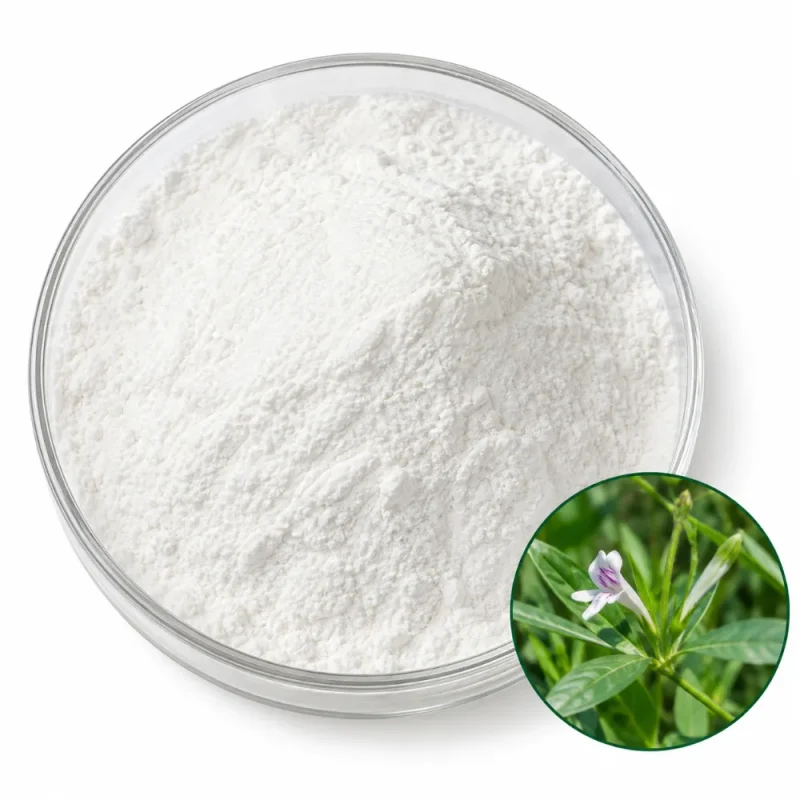
The raw material is the aerial part of Andrographis paniculata (Burm.f.) Nees (Acanthaceae), with leaves as the richest portion; roots are not the source. Related compounds in the same plant include 14-deoxyandrographolide, 14-deoxy-11,12-didehydroandrographolide and the glucoside neoandrographolide, which are separate products with their own identifiers.
Buyers comparing the plant’s products can look at Andrographis paniculata extract with 10–50% andrographolides, Andrographis paniculata extract powder and kalmegh powder. None of these is a single-compound grade, and the CAS number 5508-58-7 and the InChIKey in the table identify the compound itself.
Naming varies across suppliers. Andrographolide appears as andrographolide, as andrographolides in the plural for the group, and as total lactones for an extract. A specification that quotes the CAS number 5508-58-7, the HPLC grade and the word single-compound separates the isolated diterpenoid from every mixed product on the market.