Asiatic Acid Chemical Identity
Asiatic acid has the molecular formula C30H48O5 and a molecular weight of 488.7. The skeleton is the five-ring ursane system, with a double bond between C12 and C13, a carboxylic acid at C28, and hydroxyl groups at C2, C3 and C23. The hydroxyl at C23 is a primary alcohol on one of the angular methyl groups, and it distinguishes asiatic acid from the simpler ursolic acid, which has only the hydroxyl at C3. The several hydroxyls add polarity, yet the carbon skeleton is large and rigid enough that the molecule stays insoluble in water.
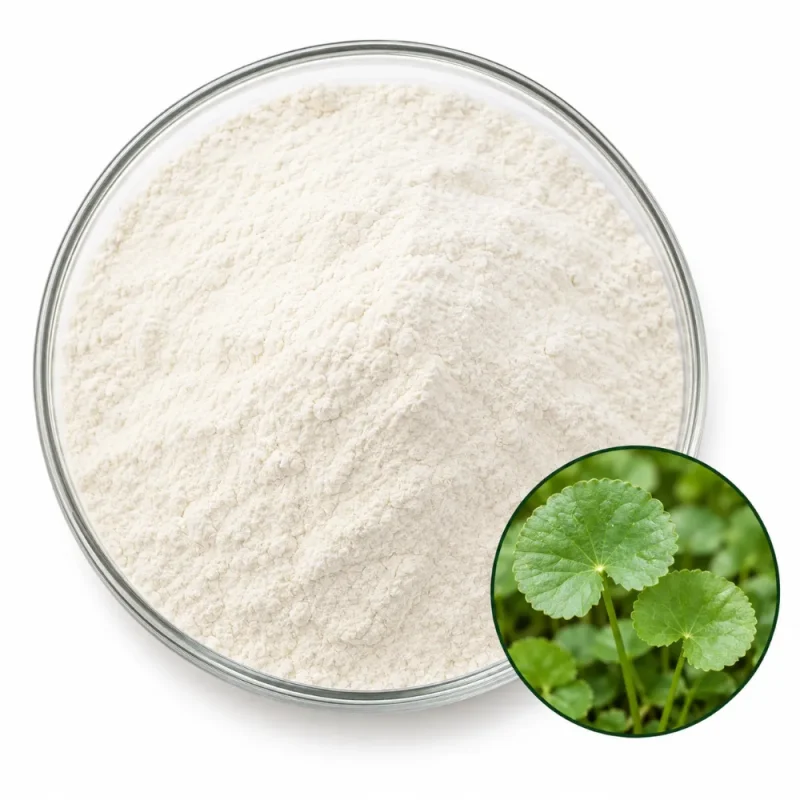
In the plant, asiatic acid is the aglycone of asiaticoside, a saponin that carries a trisaccharide chain on the carboxyl group. Madecassic acid, which has an extra hydroxyl at C6, is the aglycone of madecassoside, and the two acids are the pair that centella chemistry revolves around. The natural source is the aerial parts of Centella asiatica (L.) Urb., known as gotu kola, a plant of the family Apiaceae. Related products are the Gotu Kola / Centella asiatica Extract 8% total triterpenes, the 10:1 Centella Extract Powder and the milled Gotu Kola (Centella) Powder. The extracts are defined by a combined triterpene content, and asiatic acid here is one purified compound.
The Indian name brahmi is used for centella in some regions and for an unrelated plant in others, so a specification should always give the botanical name next to the common name.