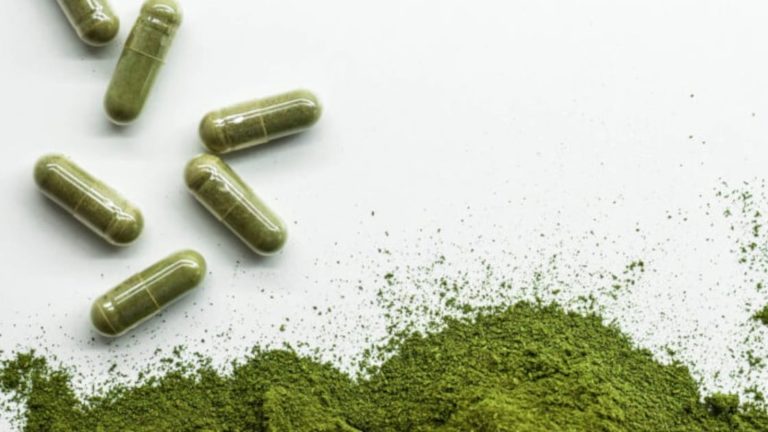
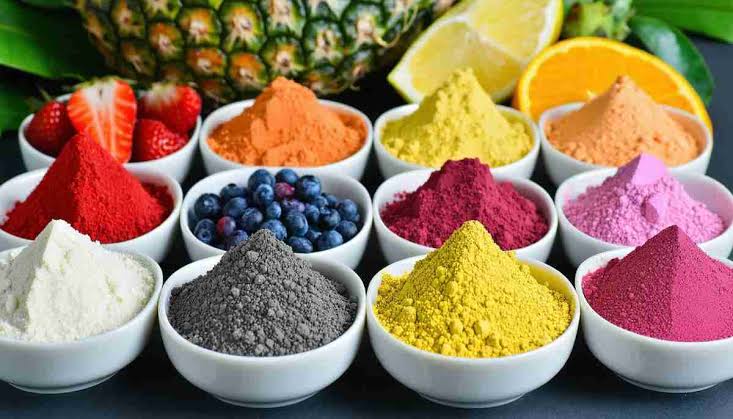
Botanical powders are dried and milled materials made from defined plant sources — roots, rhizomes, leaves, flowers, bark, stems or other parts. Unlike botanical extracts, conventional whole botanical powders involve no extraction or concentration step and so retain much of the original plant matrix. Choosing one takes more than a plant name: botanical identity, plant part, processing, particle size, moisture, density, flowability, sensory character and the intended dosage form all affect performance in manufacturing and in the finished product.
Botanical Powder at a Glance
| Attribute | Typical Characteristic |
|---|---|
| Starting material | Defined botanical material or plant part |
| Main process | Cleaning, drying, milling, and sieving |
| Extraction step | None for conventional whole botanical powders |
| Plant matrix | Largely retained |
| Common specifications | Identity, plant part, particle size, moisture |
| Typical applications | Capsules, tablets, dry blends, foods, beverages |
| Water behavior | Often dispersible or suspended rather than fully soluble |
What Are Botanical Powders?
A botanical powder is generally made by cleaning and drying a defined plant material, milling it and sieving it to a controlled particle size. Commercial identity should name the scientific species and plant part rather than a common name alone — a principle reflected in USP’s guidance on identification of articles of botanical origin, which evaluates identity against the known species and plant part. Milling also changes particle size, handling and many of the morphological features used for visual identification, so powdered material behaves differently from intact or cut-and-sifted botanicals. Our Botanical Powders category holds mechanically processed whole botanicals, with fruit and other specialized powders kept separate where source or process differs.
Botanical Powder vs Extract Powder
Being a dry powder says nothing about how an ingredient was made. A whole botanical powder is dried and milled plant material; a botanical extract goes through extraction, separation, concentration and drying. USP General Chapter <565> Botanical Extracts describes extraction as separating constituents with a suitable solvent and further processing the result. Juice-derived powders are a third category, starting from expressed juice or juice solids. Because whole powders, extract powders and juice powders differ in concentration, inclusion level, physical behavior and sensory character, buyers should compare different specifications for each — see Botanical Extract vs Botanical Powder for a direct comparison.
How Botanical Powders Are Made
The sequence is simple, but every stage affects identity, consistency and performance; a fuller account is in How Botanical Powders Are Made: Drying, Milling & Sieving.
Botanical Selection and Identification
Production starts with a clearly defined raw material: scientific name, plant part, origin, raw-material condition, processing form and intended grade. The American Herbal Products Association places identification, harvesting, post-harvest handling, processing, packaging and storage in one quality framework in its botanical identity and quality guidance. For repeat supply, traceability should connect origin, incoming material, processing history, finished batch and documents, as outlined in our Sourcing & Traceability page.
Cleaning and Preparation
Soil, damaged matter, stones and other foreign material are removed through sorting, washing, trimming, cutting or separating the required plant part, with screening, sieving or magnetic controls used where appropriate. Dense roots and rhizomes may need more intensive preparation, delicate leaves and flowers gentler handling.
Drying
Drying must lower moisture enough for storage and milling without needlessly damaging color, aroma, texture or sensitive constituents. Temperature, airflow and time are set for the botanical: too much heat alters desirable characteristics, too little drying raises caking, storage and microbiological risks.
Milling and Sieving
The dried material is reduced to the required size and may be sieved or classified. “80 mesh” describes fineness, not concentration or potency, and particle characteristics affect flow, bulk density, blending, capsule or tablet processing, mouthfeel, dispersibility and sedimentation. The aim is a fit-for-purpose particle-size range rather than the finest possible powder.
Microbial Reduction When Required
Agricultural materials carry varying microbiological loads depending on source, harvest, handling and processing. Where further reduction is needed, a suitable validated treatment — steam treatment is one option for selected botanicals — may be chosen for the material, specification, market and application, balancing microbiological goals against sensory, physical and compositional effects.
Types of Botanical Powders by Source
Grouping by plant part matters because tissues differ in composition, fiber, pigmentation, density, flavor and milling behavior.
Root and Rhizome Powders
Made from cleaned, dried underground structures — for example Ashwagandha Root Powder, Ginger Root Powder, Turmeric Root Powder, Licorice Root Powder or Dandelion Root Powder. Dense or fibrous roots may need different cutting and milling conditions from softer aerial material.
Leaf and Herb Powders
Produced from leaves, herbs or defined aerial parts, such as Alfalfa Leaf Powder, Green Tea Leaf Powder, moringa or nettle leaf. They often keep natural pigments and fibrous solids that shape color, density, texture and water behavior, and leaf-only material is not necessarily equivalent to powder from stems, sprouts, roots or mixed aerial tissue.
Flower, Bark, and Stem Powders
Flowers, petals, calyces, bark and stems can also be dried and milled. Flower materials may carry strong pigments and aromas, while bark and stem materials are usually more fibrous and need more intensive milling; in each case the precise plant part should be defined.
Whole-Plant and Specialty Powders
Some ingredients use broader aerial portions or most of the usable plant. These retain substantial structural solids and can behave differently from concentrated extracts in blending, compression or liquid dispersion.
Fruit and Other Specialized Powders
A fruit powder may be whole fruit, selected fruit solids or spray-dried juice, forms that differ considerably in fiber, carrier use, sensory character, particle behavior and dispersion. That is why we keep Fruit Powders separate from conventional botanical powders — the processing pathway, not just the botanical source, defines the ingredient form.
Why Botanical Identity and Plant Part Matter
A common name is rarely a complete specification. Scientific identification clarifies which species is being bought, especially where related plants share common names, and plant part adds another layer because root, leaf, flower, bark, seed or aerial material of the same species can differ in constituent profile, fiber, pigmentation, aroma and flavor, bulk density, milling response and formulation behavior. Growing region, maturity, post-harvest handling, storage and processing add further variation, so for repeat production buyers should check not only analytical limits but also whether commercially important physical and sensory characteristics stay consistent between batches.
Key Physical Properties of Botanical Powders
Two powders of the same species and plant part can still behave differently in manufacturing, so grade selection must consider physical properties alongside identity.
Particle Size and Mesh
Particle size affects flow, blending, filling, dispersion and mouthfeel. Research indexed in PubMed shows that grinding and sieve fractionation can alter the physical, flow and hydration properties of plant powders, with effects varying by material. Finer particles can improve texture or dispersion in some systems but increase cohesiveness, dusting and handling difficulty.
Mesh Size vs Particle-Size Distribution
Mesh is a practical sieve description but does not fully characterize a distribution. Measurements such as D10, D50 (median) and D90 describe where 10%, 50% and 90% of particles fall, so two powders meeting the same nominal mesh can still differ. A useful specification states the test method, sieve or size range, percentage passing or retained, acceptance limits and — where tighter control is needed — D-values. A capsule blend may not need the same control as a beverage powder where mouthfeel and sedimentation are critical. Micronized material is finer but not automatically better, since it can be more cohesive and harder to handle; the objective is repeatable performance. Our guide to Botanical Powder Particle Size & Mesh Size goes into detail.
Bulk Density and Flowability
Bulk density — the volume a given mass of loose powder occupies — matters wherever fill volume, feeding, blending or handling affects production; a low-density material can take up more capsule or batch volume than its weight suggests. Flowability governs movement through hoppers, feeders, fillers and presses, and tapped density with derived indices such as the Hausner ratio or Carr index can add detail.
Moisture and Water Activity
Moisture affects flow, caking, sensory quality, stability and microbiological risk. Moisture content is how much water is present; water activity is how available that water is for microbial growth and stability-related change. Suitable limits depend on material, packaging, storage and application.
Color, Flavor, and Aroma
Whole botanicals often keep natural pigments, bitterness, astringency, earthy or vegetal aromas and spice notes, which can support positioning or constrain formulation. Assess them at the intended use level rather than from the raw powder.
Solubility vs Dispersibility
Whole plant material should not be expected to dissolve fully. Soluble material enters the liquid phase; dispersible material distributes through the liquid but remains physically present; suspended particles stay distributed for a time but may settle. For liquids, wetting, dispersibility, sedimentation and mouthfeel are more useful descriptors than “water-soluble”. Our Functional Beverages guide applies these distinctions to clarity, suspension and sedimentation.
Botanical Powders vs Botanical Extracts
| Parameter | Botanical Powder | Botanical Extract |
|---|---|---|
| Basic processing | Drying and milling | Extraction and concentration |
| Plant matrix | Largely retained | Selectively extracted |
| Selected constituent concentration | Typically lower | Typically higher |
| Formula space | Usually requires more | Often requires less |
| Typical specification | Identity, plant part, particle size, moisture | Ratio, assay, marker, extraction parameters |
| Water behavior | Often disperses or suspends | Depends on extract composition |
| Sensory profile | Often closer to source plant | Depends on extraction and concentration |
Neither form is universally better. A whole powder suits products that call for recognizable plant material, a broader matrix and enough formulation space; an extract from our Botanical Extracts range may fit better when the product needs higher concentration, a defined marker, lower inclusion weight or another property created by extraction.
Applications of Botanical Powders
Capsules and Tablets
Capsules emphasize particle size, bulk density, flow and fill volume; tablets add compressibility, excipient compatibility and finished-tablet performance. A grade that looks right on paper should still be trialled under intended processing conditions before scale-up.
Powder Blends and Sachets
Botanicals are widely used in greens powders, nutritional blends and sachets, where differences in particle size and density can cause segregation during blending, transport or filling — so evaluate the whole blend, not each ingredient alone.
Functional Foods
Whole plant powders can suit bars, bakery and dry mixes where their texture, color, flavor and processing behavior fit the matrix, with heat, moisture, particle characteristics and inclusion rate shaping grade choice. See our Functional Foods application guide.
Functional Beverages
Liquids expose physical differences most clearly: does the powder wet readily, disperse evenly, leave sediment, change mouthfeel or create haze? Whole powders work well in smoothies, greens drinks and intentionally suspended systems; clear or low-sediment drinks may need a different grade or form.
Matching Powder Properties to Different Applications
| Application | Key Powder Properties |
|---|---|
| Capsules | Bulk density, flowability, particle size |
| Tablets | Flow, compressibility, moisture |
| Dry blends | Particle-size compatibility, density, segregation |
| Sachets | Flowability, dusting, blend uniformity |
| Functional foods | Texture, flavor, color, processing compatibility |
| Functional beverages | Wetting, dispersibility, sedimentation, mouthfeel |
There is no universally ideal mesh or grade; the right specification is the one matched to the process and finished-product requirements.
What Should Buyers Check in a Botanical Powder Specification?
| Specification Area | What to Review |
|---|---|
| Identity | Scientific name and plant part |
| Ingredient form | Whole powder, juice powder, extract, or another form |
| Physical properties | Appearance, particle size, moisture, density where relevant |
| Processing declarations | Treatment or processing information where relevant |
| Microbiology | Applicable microbial limits |
| Contaminants | Heavy metals, pesticides, mycotoxins where relevant |
| Storage | Packaging and storage requirements |
| Documentation | COA, specification, TDS, applicable declarations |
Identity Testing Should Match the Material Form
No single identity test suits every powdered botanical; the method depends on how much diagnostic structure survives processing and which related species, substitutes or adulterants must be ruled out. USP’s chapter on HPTLC identification of articles of botanical origin describes chromatographic fingerprinting against reference samples, and microscopy, other chemical methods and DNA-based techniques can also play a role. The method should be fit for the material and able to distinguish the specified botanical from reasonably foreseeable substitutes. Our Quality & Testing approach treats identity, physical parameters, microbiology, contaminants, methods and batch results as separate controls; see also Botanical Ingredient Identity Testing.
Review Microbiological and Contaminant Controls
Depending on botanical and market, specifications may cover total aerobic count, yeast and mold, relevant pathogens, heavy metals, pesticide residues, mycotoxins where applicable and foreign matter or other source-specific risks. Acceptance criteria should reflect the material, application, customer and destination-market rules rather than a single universal standard. See Testing Botanical Ingredients for Heavy Metals, Pesticides & Microbes.
Storage and Packaging Considerations
Moisture, oxygen, heat, light or strong surrounding odors can cause caking, poorer flow and changes in color, aroma, oxidative stability and microbiological risk even when identity is unchanged. Packaging should protect the specific ingredient in its distribution environment, and shelf life should be ingredient- and packaging-specific, supported by a specification or stability basis rather than a generic rule.
Confirm Supporting Documentation
Typical records include a batch COA, product specification, TDS, origin information, treatment declarations, allergen or GMO statements where applicable and other market-specific documents. The specification defines what the material must meet; the COA reports a batch’s results. For U.S. supplement manufacturing, FDA’s dietary supplement CGMP guidance sets the framework for component specifications, identity verification, quality controls and records under 21 CFR Part 111.
How Do You Choose the Right Botanical Powder?
| Question | Decision Point |
|---|---|
| What botanical is required? | Confirm species and plant part |
| What ingredient form is needed? | Whole powder, juice powder, extract, or another form |
| Where will it be used? | Capsule, tablet, blend, food, or beverage |
| Which physical properties matter? | Particle size, density, flow, dispersion |
| What quality requirements apply? | Identity, microbiology, contaminants, documentation |
| Has the grade been evaluated? | Test a representative sample before scale-up |
Confirm Identity and Ingredient Form
Start with species, plant part and processing form. “Green tea powder” might mean whole leaf material or one of several extract forms, and ingredients sharing a botanical origin are not necessarily interchangeable.
Match the Powder to the Dosage Form
Capsules depend heavily on density and flow, tablets on compression behavior, beverages on wetting, sedimentation and mouthfeel, and dry blends on particle-size compatibility and segregation. When several grades look similar, our Specification & Grade Matching service compares identity, form, physical properties, analytical requirements, documentation and application to find a fit-for-purpose grade rather than the finest or most processed one.
Evaluate a Representative Sample Before Scale-Up
Documentation describes what an ingredient should be; a representative sample shows how it actually performs in appearance, aroma and flavor, particle behavior, handling, blending, dispersion, sedimentation and compatibility. For repeat production, sample and batch review also show whether key physical and sensory traits stay consistent. Once a grade is defined, our Sample & Bulk Supply workflow covers the path from sample evaluation and specification approval to commercial and repeat supply.
When Does a Botanical Powder Make Sense?
A whole botanical powder is a practical choice when a product benefits from whole-botanical positioning, a broader plant matrix and sufficient formulation space, and when natural color, flavor or suspended solids are acceptable. An extract may suit better when the project needs higher concentration, a defined marker or assay, lower inclusion weight or a different solubility profile. The better ingredient is the one whose identity, processing, physical properties, specification and formulation behavior match the finished product.
Request Botanical Powder Specifications or Samples
Browse our Botanical Powders and tell us the species and plant part, required mesh or particle-size range, application, estimated quantity and destination market. Contact Essencefield Botanicals to request a specification, representative COA or sample.