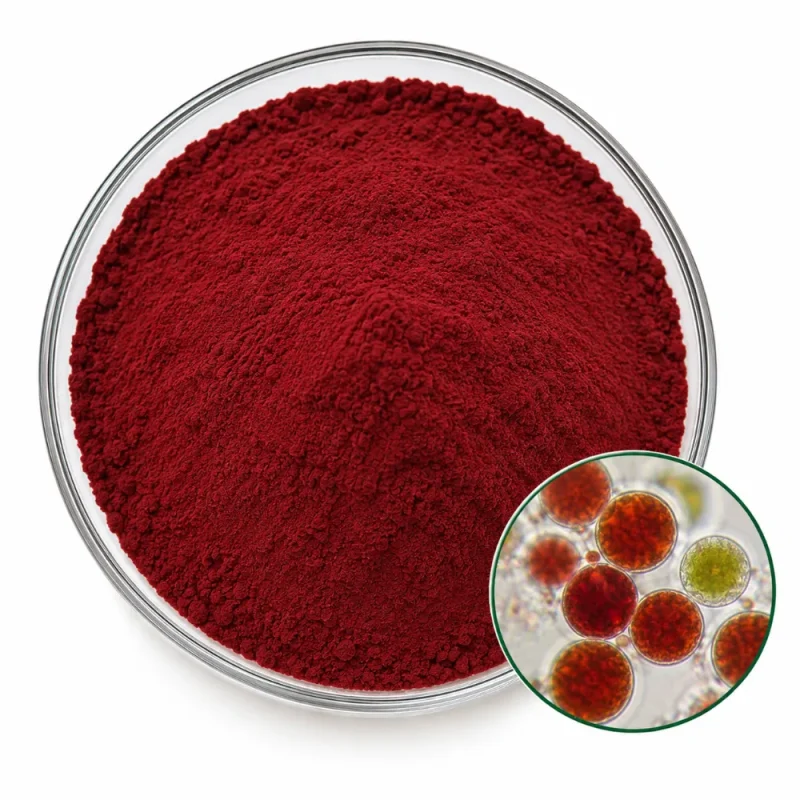
Astaxanthin Chemical Identity
Astaxanthin has the molecular formula C40H52O4 and a molecular weight of 596.8. The backbone is a long conjugated polyene chain between two six-membered end rings, and the chain absorbs strongly in the blue-green range, which explains the deep red color. Each end ring carries a hydroxyl and a keto group, and those groups make astaxanthin a xanthophyll rather than a plain carotene such as lycopene.
The natural source is the whole alga Haematococcus pluvialis Flot. When light, salt or nutrient stress hits the cell, it forms a thick-walled resting spore and fills it with esterified astaxanthin. The molecule behind the (3S,3’S) designation is the stereoisomer that the alga makes. Synthetic astaxanthin exists as a mixture of stereoisomers, so stating the natural source tells a buyer which composition to expect. The whole algal biomass is supplied separately as Haematococcus pluvialis Powder, which keeps the pigment inside the cell and is a different ingredient from the isolated carotenoid. Breaking the thick cell wall is the step that releases the pigment, and whole algal powder and isolated astaxanthin therefore behave differently in a formula. Both are produced from the same alga, and the choice depends on whether a defined carotenoid content or the whole biomass is wanted.