Rutin 98%

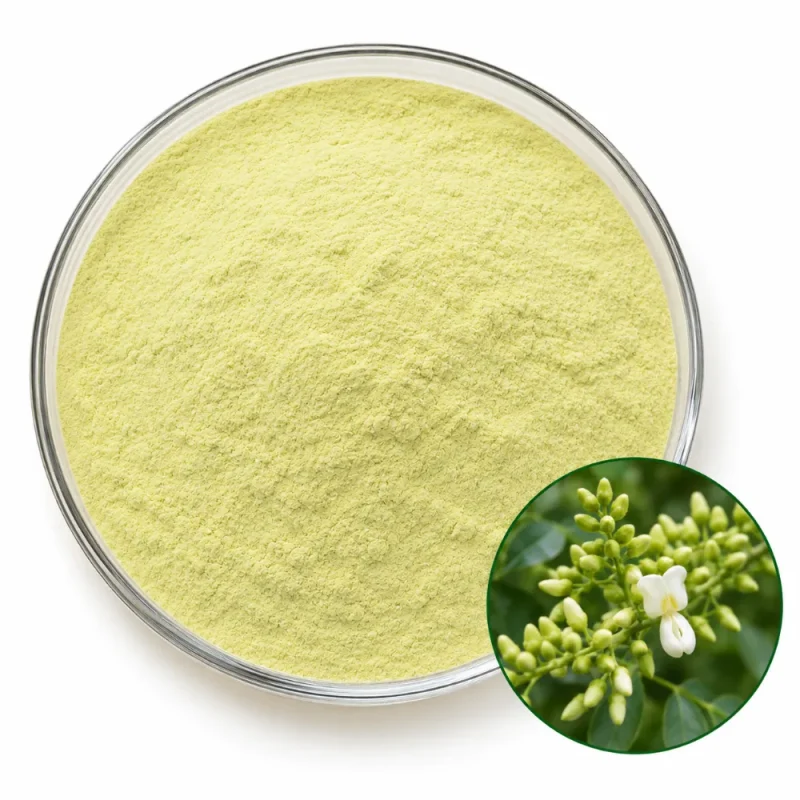
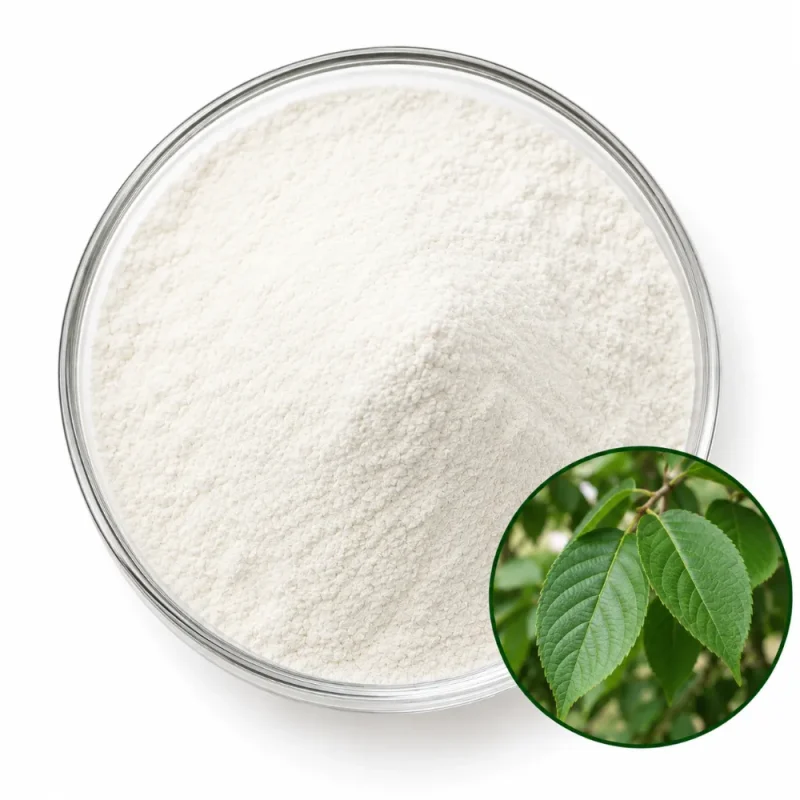
The quercetin glycoside of Sophora flower bud, rutin is isolated here from the bud of Sophora japonica by solvent extraction and purification. It is quercetin joined to the disaccharide rutinose, and it separates from the plant extract as a yellow crystalline powder.

The primary grade is 98% rutin by HPLC, with a 95% grade also supplied, in Food / Dietary Supplement Grade. The powder is slightly soluble in water. It is used where the single glycoside, and not the quercetin aglycone or a mixed Sophora extract, is the defined ingredient.

Rutin Chemical Identity

Rutin has the molecular formula C27H30O16 and a molecular weight of 610.5. The aglycone is quercetin, a flavonol with a catechol B-ring, and a rutinose unit of glucose and rhamnose is attached at position 3. The sugar chain adds polarity and makes the glycoside more soluble in hot water than quercetin, although not freely soluble. In the plant the glycoside is the storage form, and the aglycone is released by acid or enzyme.

Rutin is commonly sold as a hydrate, and the number of water molecules in the crystal affects the molecular weight and the assay. The table lists the anhydrous formula and weight from the reference record, and a buyer who needs the hydrate form should state it when ordering. The natural source is the flower bud of Sophora japonica L., a name that GBIF now treats as a synonym of Styphnolobium japonicum, and the bud is the established commercial source of the glycoside. Related products from the same plant are Quercetin 98%, Quercetin Dihydrate 99% and Kaempferol 98%, which are aglycones, not the glycoside.

Quercetin and rutin differ in how they are used. The glycoside is a formulation ingredient that dissolves a little in hot water and is carried in drink bases and blends, whereas the aglycone is the more lipophilic form used in oil and complex systems. Choosing between them is a matter of dissolution behavior, taste and handling, and the table for each product states the form so that a buyer does not swap them by accident.
Typical Specifications

Specification ItemProduct Information
Natural SourceSophora japonica flower bud
Plant PartFlower
ProcessingSolvent Extraction & Purification
Compound ClassFlavonoids, Polyphenols
Chemical Name (IUPAC)2-(3,4-dihydroxyphenyl)-5,7-dihydroxy-3-[(2S,3R,4S,5S,6R)-3,4,5-trihydroxy-6-[[(2R,3R,4R,5R,6S)-3,4,5-trihydroxy-6-methyloxan-2-yl]oxymethyl]oxan-2-yl]oxychromen-4-one
CAS Number153-18-4
Molecular FormulaC27H30O16
Molecular Weight610.5
PubChem CID5280805
InChIKeyIKGXIBQEEMLURG-NVPNHPEKSA-N
SMILESCC1C(C(C(C(O1)OCC2C(C(C(C(O2)OC3=C(OC4=CC(=CC(=C4C3=O)O)O)C5=CC(=C(C=C5)O)O)O)O)O)O)O)O
Purity98% (HPLC)
Available Grades95% · 98% (HPLC)
GradeFood / Dietary Supplement Grade
AppearanceYellow powder
Solubility / DispersibilitySlightly Soluble in Water
Quality Parameters
Moisture (LOD)≤5.0%
Total Ash≤5.0%
Heavy MetalsLead ≤2 ppm · Arsenic ≤1 ppm · Cadmium ≤1 ppm · Mercury ≤0.1 ppm
MicrobiologyTPC ≤1,000 cfu/g · Yeast & Mold ≤100 cfu/g · E. coli Negative · Salmonella Negative/25 g
Shelf Life24 months in unopened original packaging, cool and dry storage

Rutin Purity Grades & Impurities

GradeAssay & MethodWhere It Fits
95% RutinHPLCPremixes and drink powders
98% RutinHPLCCapsules and reference-grade blends

The HPLC assay measures the rutin peak against a reference standard near the wavelength where the flavonol absorbs strongly, and the percentage compares that peak with everything else detected. It leaves out water, ash and compounds that do not absorb. Because rutin crystallizes with water, the assay is expressed on a stated basis, and a buyer comparing two lots should check whether both are on the same one.

The related substances of Sophora rutin are the other flavonoid glycosides of the bud. Quercetin, the aglycone, appears when the glycoside hydrolyzes. Isoquercitrin is the glucoside that remains after the rhamnose is lost, and quercetin 3-O-rutinoside isomers and kaempferol glycosides appear as smaller peaks. Rutin elutes after quercetin glycosides that have lost sugar, so the trace should show clean separation between the glycoside group and the aglycone.

The 95% and 98% grades differ in the share of those companions. The lower grade leaves a few percent of related flavonoids and some pigment, giving a slightly deeper yellow, while the higher grade is lighter and cleaner. Sugars, polysaccharides and mineral matter are invisible to HPLC and are limited through the moisture and ash rows. A greenish tint to the powder points to residual chlorophyll-type pigment from the bud.

Rutin Solubility & Delivery

Rutin is slightly soluble in cold water and more soluble in hot water, and it dissolves in methanol, ethanol and dilute alkali. The sugar chain keeps it more polar than quercetin, yet the flat aglycone and hydrogen bonding make the crystal stable, so dissolution is slow. On cooling a hot solution deposits fine yellow crystals, which is both a purification step and a nuisance in clear liquids.

Delivery therefore leans on dispersion and on particle size. Fine milling, wetting agents and cyclodextrin or phospholipid complexes are used to raise dissolution. In liquids, a suspending agent holds the solid evenly, and a mildly acidic pH reduces oxidation of the catechol ring. Strong alkali dissolves the glycoside but opens the ring and darkens the liquid, so it is used for analysis and not for finished products. In dry blends rutin is stable, though it picks up moisture as a hydrate, and a desiccant in the pack and a closed container preserve flow.

Crystallization on standing is the behavior to plan for. A hot solution of rutin that looks clear at the filling temperature deposits fine yellow crystals as it cools, and the deposit can clog nozzles and give a gritty mouthfeel. Dosing in a suspension with a thickener, or accepting a hazy appearance from the start, avoids the surprise that a slowly cooling clear solution brings.

Application Areas

Capsule Fills of the Glycoside

Capsules take rutin at moderate inclusion and a steady fill weight. The crystalline powder is cohesive and picks up some moisture, so a flow agent, a sieved blend and a dry filling room keep the weight steady between lots.

Tablets With Disintegrants

Tablets press rutin with a dry binder, a lubricant and a disintegrant. The hard crystals wear tooling, so a compression trial checks punch condition, and a disintegration test confirms that the slightly soluble solid is released at the intended rate.

Hot-Dissolved Drink Bases

Rutin dissolves better in hot water, so drink bases are prepared warm and cooled with stirring. The solution may deposit yellow crystals on standing, which is why clear products use a suspending agent or accept a hazy appearance, and why filling is done while the base is still warm.

Flavonoid Blends With Quercetin

Blends with quercetin and kaempferol compare glycoside and aglycone forms. Each ingredient is weighed on its own and premixed in steps, and the HPLC trace of the blend is checked to confirm that no hydrolysis has shifted the ratio.

Premix Blends for Sachets

Sachets carry rutin in dry premixes with sweeteners and acids. The yellow crystals give a speckled look in a pale base, so a deeper-colored flavor system or a fine-milled grade hides them, and the blend is sieved twice to remove lumps before filling.

Packaging & Commercial Supply

Essencefield supports product evaluation, formulation trials, commercial orders, and ongoing ingredient supply. Packaging, storage, and shipping arrangements are determined by product characteristics, order quantity, stability requirements, and destination-market needs.

Supply ItemGeneral Information
SampleAvailable upon request for formulation, testing, and supplier evaluation
Order Quantities100 g · 1 kg · 5 kg · 25 kg · 100 kg · 500 kg · Bulk
Sample Lead TimeTypically 5–7 days after sample confirmation
Production Lead TimeTypically 15–30 days after order and specification confirmation
PackagingSuitable protective inner packaging with bags, cartons, drums, or other appropriate outer packaging
StorageStore in tightly sealed, suitable protective packaging in a cool, dry environment. Protect from moisture, heat, and direct sunlight. Specific storage conditions follow the approved product specification.
DocumentationCOA · Product Specification · TDS · SDS · Applicable declarations (as applicable)

Final order quantities, lead times, packaging, documentation, and shipping arrangements are confirmed according to the selected product and commercial requirements.

Request Ingredient Specifications & Quote

Share your target specification, application, quantity, and documentation needs. We’ll help confirm suitable options, samples, and commercial supply details.