18-Alpha-Glycyrrhetinic Acid 98%

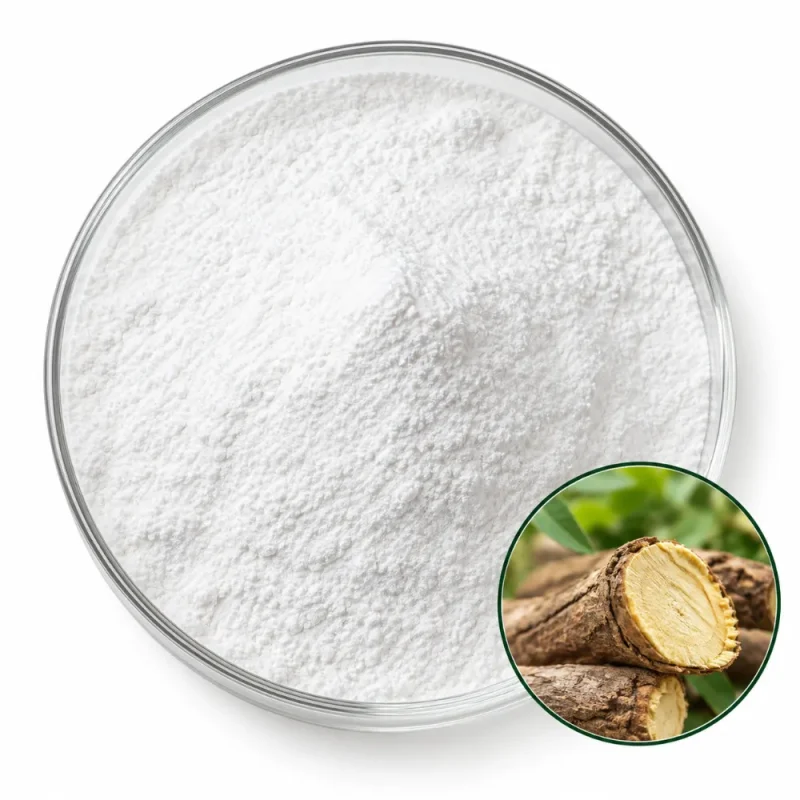
The sugar-free triterpenoid core of licorice saponins, 18-alpha-glycyrrhetinic acid is isolated here from the root of Glycyrrhiza uralensis by ethanol extraction and purification. It is one of two C18 epimers of glycyrrhetinic acid, and the alpha designation is the identity of this product.

The primary grade is 98% 18-alpha-glycyrrhetinic acid by HPLC, in Food / Dietary Supplement Grade. The off-white powder does not dissolve in water. The name carries a stereochemical statement, and a specification that drops it describes a different compound.

18-Alpha-Glycyrrhetinic Acid Chemical Identity

18-Alpha-glycyrrhetinic acid has the molecular formula C30H46O4 and a molecular weight of 470.7. It is a pentacyclic triterpenoid of the oleanane type, with a hydroxyl group at C3, a ketone at C11 conjugated to a double bond, and a carboxylic acid at C20. The alpha prefix describes the hydrogen at C18, which sits on the opposite face of the ring system from that in the beta epimer. That single change alters the shape of the D/E ring junction, the packing of the crystal and the chromatographic retention, while the formula and weight stay identical.

Glycyrrhetinic acid is the aglycone of glycyrrhizic acid, the sweet saponin of licorice, in which two glucuronic acid units are attached at C3. The beta form is the dominant natural series. 18-Alpha-glycyrrhetinic acid is a less abundant component and can also be produced by epimerization of the beta form under acidic or basic conditions, so the source statement and the stereochemical descriptor are both part of the identity. The natural source here is the root of Glycyrrhiza uralensis Fisch. ex DC. Licorice root is supplied in other forms: Licorice Extract 20% Glycyrrhizic Acid, the 10:1 Licorice Root Extract Powder and the milled Licorice Root Powder. The beta epimer is supplied as 18-Beta-Glycyrrhetinic Acid 98%.

Typical Specifications

Specification ItemProduct Information
Natural SourceGlycyrrhiza uralensis root
Plant PartRoot & Rhizome
ProcessingEthanol Extraction & Purification
Compound ClassTriterpenoids, Terpenoids
Chemical Name (IUPAC)(2S,4aS,6aR,6aS,6bR,8aR,10S,12aS,14bS)-10-hydroxy-2,4a,6a,6b,9,9,12a-heptamethyl-13-oxo-3,4,5,6,6a,7,8,8a,10,11,12,14b-dodecahydro-1H-picene-2-carboxylic acid
CAS Number1449-05-4
Molecular FormulaC30H46O4
Molecular Weight470.7
PubChem CID73398
InChIKeyMPDGHEJMBKOTSU-PMTKVOBESA-N
SMILESCC1(C2CCC3(C(C2(CCC1O)C)C(=O)C=C4C3(CCC5(C4CC(CC5)(C)C(=O)O)C)C)C)C
Purity98% (HPLC)
GradeFood / Dietary Supplement Grade
AppearanceOff-White powder
Solubility / DispersibilityInsoluble in Water
Quality Parameters
Moisture (LOD)≤5.0%
Total Ash≤5.0%
Heavy MetalsLead ≤2 ppm · Arsenic ≤1 ppm · Cadmium ≤1 ppm · Mercury ≤0.1 ppm
MicrobiologyTPC ≤1,000 cfu/g · Yeast & Mold ≤100 cfu/g · E. coli Negative · Salmonella Negative/25 g
Shelf Life24 months in unopened original packaging, cool and dry storage

18-Alpha-Glycyrrhetinic Acid Purity Grades & Impurities

The 98% figure is an HPLC result that compares the 18-alpha-glycyrrhetinic acid peak with the other detected peaks, with detection at the wavelength where the conjugated ketone absorbs. It leaves out water, ash and any component without a response, so the moisture and ash limits in the table are needed beside it. Only one grade of 18-alpha-glycyrrhetinic acid is listed.

The principal related substance is the beta epimer. The two epimers share the mass and nearly the same spectrum, and they elute close together on a reversed-phase column, so a method must resolve them and the report should state the share of each. A lot sold as 18-alpha-glycyrrhetinic acid but dominated by the beta form would pass a mass test and fail an identity test, which is the main reason to look at the chromatographic pattern and the optical rotation. Because the alpha form can be made from the beta form, a trace of the starting material is the characteristic impurity of an epimerized lot.

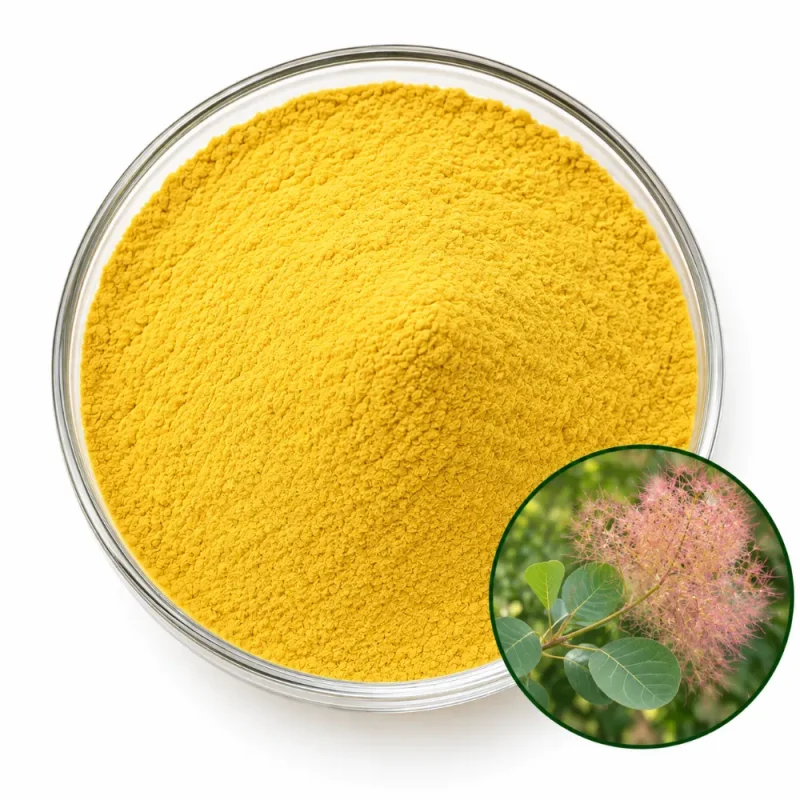
Other triterpenoids of the root are the next class of related substances. Glycyrrhizic acid and its monoglucuronide indicate incomplete hydrolysis, while 11-deoxy and dehydro derivatives, glabrolide and other oleanane relatives appear at trace level. A white to off-white color indicates a clean lot, and a yellow tint points to residual flavonoids of the root, such as liquiritigenin, which are removed in purification.

Plant-derived and semi-synthetic routes can both reach the 18-alpha-glycyrrhetinic acid peak. The epimer descriptor, the source and the impurity pattern together tell a buyer which route the material took.

18-Alpha-Glycyrrhetinic Acid Solubility & Delivery

18-Alpha-glycyrrhetinic acid is insoluble in water and dissolves in ethanol, methanol, acetone and dimethyl sulfoxide. It is a large, rigid, hydrophobic molecule with a single carboxylic acid, and its logP is high, so it favors lipid and surfactant phases. As an acid, it forms salts with alkali, which dissolve in water far better than the free acid, but the salt is a different chemical form and is not what this product supplies.

For delivery of 18-alpha-glycyrrhetinic acid, the formulator works with dispersion. Fine milling, wetting agents, oil-based suspensions, cyclodextrin and phospholipid complexes and amorphous solid dispersions are the approaches described in the literature. In liquid bases, a suspending agent holds the solid, and a pH well below the pKa keeps the molecule in its free-acid form. In dry blends the powder is stable, free flowing if the particles are not too fine, and not hygroscopic, though static can complicate the weighing of small amounts, and anti-static tools plus a two-stage premix with a dry carrier give uniform results.

Application Areas

Capsules With Epimer Records

Capsules take 18-alpha-glycyrrhetinic acid at small weight. The fine powder is electrostatic, so anti-static scoops, a flow agent and a two-step premix with a dry carrier give an even fill, and the lot number is recorded with the epimer designation.

Oil-Based Suspensions

Oil-based fills disperse the milled 18-alpha-glycyrrhetinic acid with an emulsifier. Settling is checked before encapsulation because the crystals are denser than the oil, and the stirred tank keeps the dose uniform from the first unit to the last.

Tablet Blends With Wetting Agents

Tablets press 18-alpha-glycyrrhetinic acid with a dry binder, a lubricant and a wetting agent to help the hydrophobic crystal release. A disintegration and dissolution trial on the full blend confirms that the insoluble solid leaves the tablet.

Epimer Comparison Blends

Formulators comparing the two epimers build blends with the alpha and beta forms in fixed ratios. Each ingredient is weighed on its own, and the HPLC trace of the blend, run on a column that resolves the pair, confirms the ratio.

Reference Standards for Method Work

Analytical teams use the 98% grade to confirm that a method separates the two epimers. The standard is stored dry, a retained sample is kept per lot, and the retention-time pair is filed with each batch record.

Packaging & Commercial Supply

Essencefield supports product evaluation, formulation trials, commercial orders, and ongoing ingredient supply. Packaging, storage, and shipping arrangements are determined by product characteristics, order quantity, stability requirements, and destination-market needs.

Supply ItemGeneral Information
SampleAvailable upon request for formulation, testing, and supplier evaluation
Order Quantities100 g · 1 kg · 5 kg · 25 kg · 100 kg · 500 kg · Bulk
Sample Lead TimeTypically 5–7 days after sample confirmation
Production Lead TimeTypically 15–30 days after order and specification confirmation
PackagingSuitable protective inner packaging with bags, cartons, drums, or other appropriate outer packaging
StorageStore in tightly sealed, suitable protective packaging in a cool, dry environment. Protect from moisture, heat, and direct sunlight. Specific storage conditions follow the approved product specification.
DocumentationCOA · Product Specification · TDS · SDS · Applicable declarations (as applicable)

Final order quantities, lead times, packaging, documentation, and shipping arrangements are confirmed according to the selected product and commercial requirements.

Request Ingredient Specifications & Quote

Share your target specification, application, quantity, and documentation needs. We’ll help confirm suitable options, samples, and commercial supply details.